|
Only have a minute? Listen instead |
Many people might find it ironic that a coastal area such as the Rio Grande Valley suffers from a chronic, and increasingly urgent, shortage of potable water. But meeting the needs of Valley residents, and addressing the region’s growth, isn’t as simple as simply sucking water out of the Gulf of Mexico, just as we currently draw our drinking and irrigation water from the Rio Grande.
It’s more difficult, and more costly, to filter out the salt and minerals from the gulf water that aren’t found in the river. But our region’s increasingly drier climate and Mexico’s chronic inability — or refusal — to abide by our water-sharing treaty has left Rio Grande water levels critically low. We need an alternative source of water, and it won’t come cheap. Some local officials have even suggested building a pipeline to draw water from the Sabine River, on the Texas-Louisiana border more than 400 miles away.
Thus, most Valley residents surely welcome last week’s announcement of a planned billion-dollar desalination plant on South Padre Island.

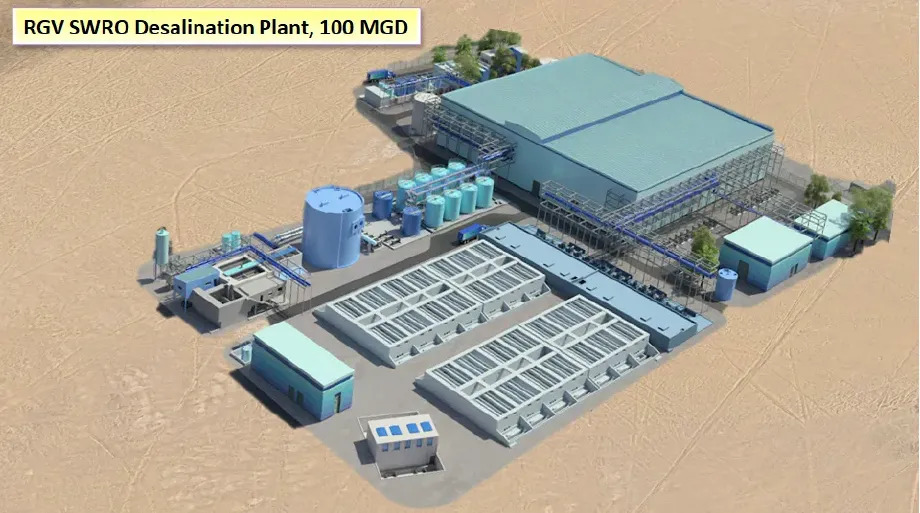
US Desalination LLC and IDE Technologies announced plans to build a reverse-osmosis plant to convert water from the gulf into potable water for the entire Valley. Local official and representatives of the partnership said they expect the privately funded facility will produce around 50 million gallons per day, but will be able to produce twice that amount, and capacity can be increased as needed.
The plant is part of a growing dependence on seawater to meet public needs. More than 16,000 desalination plants already operate around the world, including a smaller facility in the Los Fresnos area, producing nearly 30 billion gallons of fresh water per day. The Los Fresnos plant has a capacity of 10 million gallons a day.
Some people already have raised environmental concerns about the new operation. Unfortunately, we must weigh those concerns against the public’s needs.
However, advancements in desalination technology and processes could help mitigate some of those issues.
One concern is the removal of so much water from the gulf; it takes two gallons of seawater to produce one gallon of drinking water. Modern desalination plants are becoming more efficient, however.
Another issue is the return of salt and minerals that are removed from the water back into the gulf. Environmentalists worry that will change salt levels in the water and harm sensitive marine life.
Some facilities have begun adding effluent — treated wastewater and drainage — into the discharge to dilute the elements. In addition, desalination operations are developing ways to mine the filtered material for valuable minerals such as magnesium and lithium that have industrial and pharmaceutical uses. One endeavor sponsored by the European Union targets nine elements that can be resold for industrial use. It also seeks to return some vital elements, such as calcium, back into the drinking water.
Such advances, and revenue options, could ease environmental concerns. More certain, however, is the obvious need to ensure the Valley has enough water to ensure our survival and growth. The local desalination plant can help meet those needs.