|
Only have a minute? Listen instead |
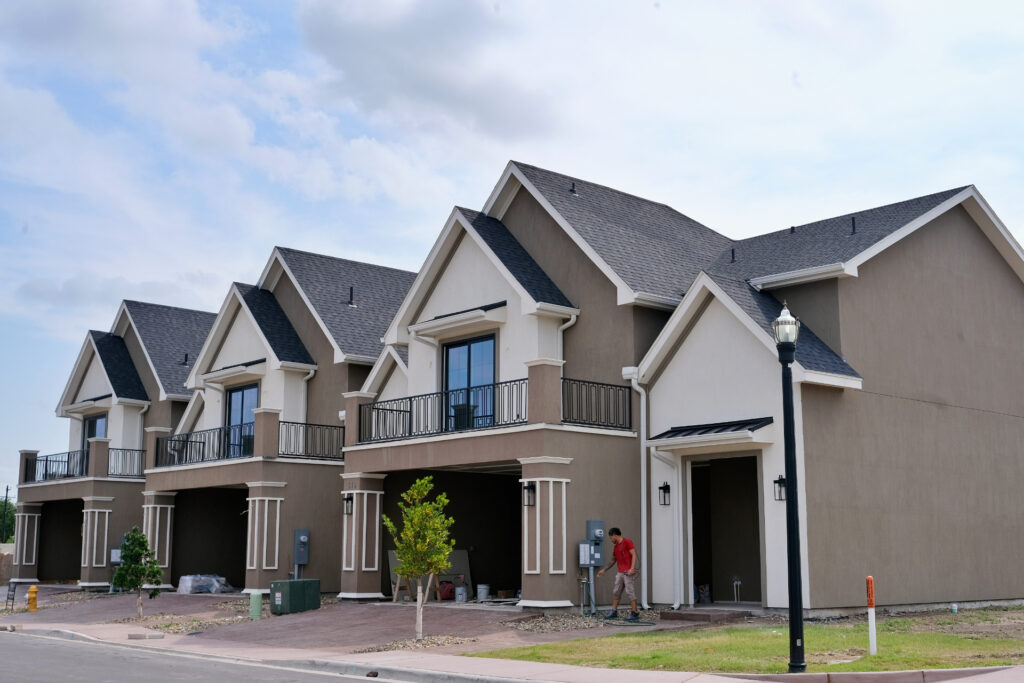
HARLINGEN — The city’s record construction boom is slowing its pace amid a federal immigration crackdown slashing the labor force while driving up building prices in a region that’s turning into a destination.
Last year, the city’s construction values climbed to a record $201.8 million, compared with $123.2 million the previous year, while this year’s values are showing a slowdown.
Amid the construction boom, U.S. Immigration and Customs Enforcement (ICE) raids have led to arrests that have deeply impacted the labor force, slowing down projects while boosting costs.
Last year’s spiking appraised property values drove Harlingen’s certified total net taxable value to $5.5 billion, up from $5.2 billion the year before, while the city’s overall construction values soared to $108 million, up from $61 million.
“Harlingen is in the middle of the biggest construction boom we have ever seen,” Mayor Norma Sepulveda said.
Meanwhile, ICE raids have cut into the labor force, slowing down construction.
“It has caused projects to stall, projects to become more expensive,” Sepulveda said.
Last year, the city’s construction permit values climbed to a record $201.8 million, with 641 projects, up from $123.2 million the year before, when 816 projects went up, city records show.
Among last year’s projects, 264 new homes were going up along with 43 duplexes and five apartment buildings, records show.
At City Hall, officials issued permits for 37 commercial projects, including three retail plazas along with office buildings, warehouses and a battery storage plant.

By April, the city’s construction permit values were up to $43.7 million, with 73 projects, down from the same month last year, when values had climbed to $76.5 million, with 68 projects.
So far this year, the city’s issued permits for projects including 83 new homes, 32 duplexes, four apartment buildings and nine commercial projects, records show.
Across town, like at construction sites across the Rio Grande Valley, federal immigration raids have sparked a labor shortage that’s led some projects to stall, cutting the size of some crews in half.
“It’s had a major impact all over the Valley,” Johnny Vasquez, executive officer with the Rio Grande Valley Builders Association, said.
“A significant part has been removed,” he said, referring to the labor force. “We’re talking minimizing jobs sites, cutting crews to two or three, virtually in half. It’s taking more time to complete construction work. Everything’s doubled. Things are getting done, but the time is doubled.”
While ICE raids have cut the labor force, new tariffs on construction materials including steel, aluminum and lumber are driving up builders’ prices.
“We’re still busy,” Armando Elizarde, a developer, said. “The tariffs and the labor force haven’t helped the market. It’s made it more difficult. The interest rates could be a little lower. But people are still buying. We’re still busy and people are working.”

Along Haine Drive, where he’s building a 77-lot subdivision, he’s sold about 75% of the development’s lots, he said.
“We’re starting slow because we’ve had trouble with the labor force,” he said. “It’s at a slower pace and it’s more expensive.”
Still, some developers are coming from Hidalgo County and up from Brownsville to build in Harlingen, Elizarde said.
“There’s more lots available,” he said, referring to Harlingen. “In Brownsville, it’s more congested. There’s not as many lots available.”
Harlingen, like the Rio Grande Valley, is growing into a destination, with SpaceX helping to put the region on the map, spotlighting South Padre Island, Bertha De La Rosa, a realtor, said.
“It is becoming a destination for a lot of people,” she said. “You’ve got SpaceX, LNG plants bringing new businesses to the area, and the medical district is a big thing. We have tons of new realtors coming into the market because they think it’s booming. We’re still a destination for Winter Texans.”
But while construction’s booming in much of the area from Harlingen to Brownsville, the housing market’s slowed from record years around 2021 to 2022, De La Rosa said.
“The market is a little soft, with interest rates, prices,” she said. “But there’s still a lot of construction going on. In certain areas, it’s still a seller’s market but it’s turning into a buyer’s market. Now, we have a lot of inventory but not enough buyers. They have a lot to choose from.”

With housing prices climbing, many buyers are shopping for homes in the $300,000 to $350,000 range and below, she said.
“That’s moving,” she said, referring to homes under $350,000. “But higher is slow in the market. It’s all price-point now.”
In the Harlingen area, the growing medical district continues drawing health care professionals like doctors, while across the Valley, federal law enforcement agencies like ICE and the Border Patrol are among the region’s top employers.
Meanwhile, SpaceX is driving in employees from Houston to California and Florida, she said.
“We’re seeing a lot of people from SpaceX,” she said. “It’s pretty significant. People like Harlingen. It’s growing but it’s not congested. Brownsville’s more congested. People don’t want to be right in Brownsville.”
Still, the Rio Grande Valley’s low cost of living continues to stand out as one of the region’s strongest selling points, De La Rosa said.
“There’s people coming to retire because prices are very affordable,” she said. “You get more for your buck.”