|
Only have a minute? Listen instead |
By Lomi Kriel | The Texas Tribune
Shortly before Christmas last year, a Border Patrol agent shot and killed Isaias Sanchez Barbosa, a 31-year-old Mexican, after he crossed the Rio Grande with a group of other migrants into Starr County.
The federal agent said he shot Sanchez Barbosa in self defense amid a fight that broke out when agents tried to make an arrest — and as the migrants were trying to retreat across the border.
More than eight months later, the fatal shooting remains under investigation by the Texas Department of Public Safety and the Office of Professional Responsibility for Customs and Border Protection, the agency overseeing Border Patrol. Citing those ongoing probes, both agencies have repeatedly declined to release information and refused to immediately provide whatever body and dash camera footage may exist, as well as radio communications and incident reports.
Starr County District Attorney Gocha Ramirez told The Texas Tribune that a grand jury in June declined to indict the Border Patrol agent.
“From my office’s perspective, the criminal investigation is closed,” he said.
The Tribune identified Sanchez Barbosa and the Border Patrol agent, Armando Flores, from court records released this week in the case, including the autopsy, the grand jury’s finding and a 8-month-old search warrant that the lead investigator never filed with the court until the Tribune inquired about its existence. (A DPS spokesperson blamed a “clerical error,” although county officials said the mistake was on the Texas Ranger.)
Despite rising scrutiny and criticism of federal immigration agents over their deadly use of force under President Donald Trump’s aggressive deportation agenda, Sanchez Barbosa’s case has received little media attention and generated no public outcry.
The shooting in the Rio Grande Valley predates other high-profile killings by federal immigration agents this year that have roiled the nation, including that of 52-year-old Lorenzo Salgado Araujo in Houston by officers also claiming self defense. The construction worker, who had lived in Texas for more than three decades and had no prior deportation order or criminal record, was shot and killed last month during what experts said was an alarming move by two unmarked vehicles to box in his white van.
Federal officials said Salgado Araujo “weaponized” his van against them. As has been the case in many other such shootings, the unnamed federal agents were not wearing body cameras and the agency said dash cam footage was not available.
The little-known Starr County case boosts the tally of known fatal shootings by immigration agents in Texas to at least three since Trump returned to the White House.
In March 2025, 23-year-old Ruben Ray Martinez, a U.S. citizen, was in South Padre Island when Immigration and Customs Enforcement officers fatally shot him during a traffic stop in which they also accused Martinez, who had no criminal record, of having used his car as a “weapon.” That case wasn’t made public until this spring when details of the shooting emerged in an unrelated records lawsuit.
A Cameron County grand jury declined to indict the federal agent involved. But in that case, DPS, which investigated Martinez’s death, quickly released body camera footage and other records after the grand jury’s decision not to criminally charge the officer.
Ericka Miller, a DPS spokesperson, said in an email that the Texas Rangers investigation in the Starr County case remains open for “administrative reasons,” but did not elaborate.
Major Carlos Delgado, a spokesperson for the Starr County Sheriff’s Office, similarly did not answer questions, pointing to the ongoing DPS investigation. The county judge, Eloy Vera, did not respond to emails, calls or texts to his cellphone.
Sanchez Barbosa’s family could not be reached. Officials with the Mexican Consulate, who repatriated his body, did not respond to questions, and neither did officials with the Foreign Affairs Ministry in Mexico.
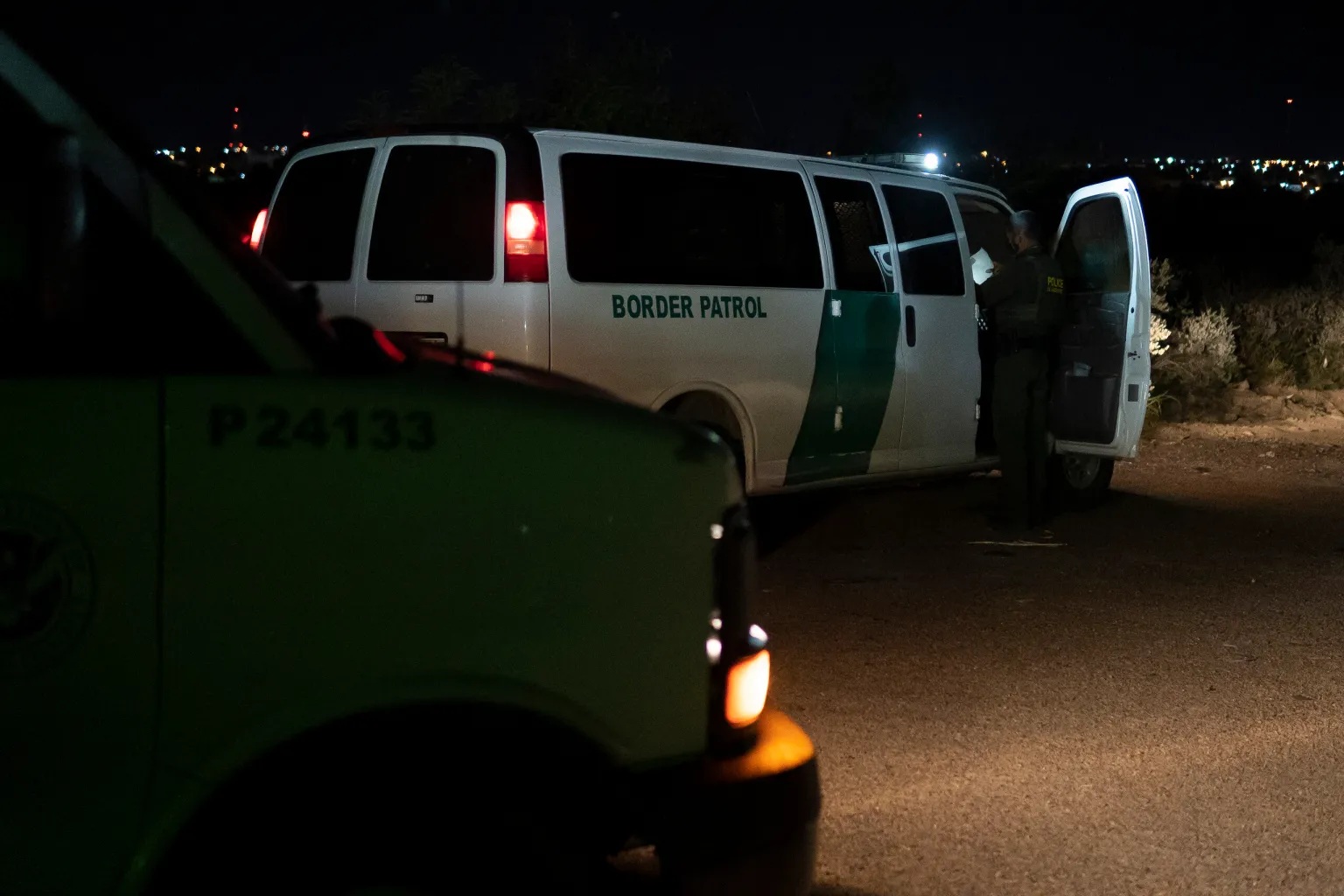
According to a Border Patrol statement posted on the agency’s website, agents were in the area conducting “targeted enforcement.” The notice of the death, which is required by Congress, was quietly posted Dec. 17, six days after the shooting. It alleged that agents spotted people “in camouflage.” At about 4 p.m. on Dec. 11, an unknown number of Border Patrol officers approached the group, who then “attempted to abscond to Mexico,” according to the statement.
One agent tried to arrest Sanchez Barbosa, who along with the officer who fired the shots was not named in the report.
Within four minutes of officers approaching the group, an agent radioed in reporting a fight had erupted and that he needed help, according to CBP’s statement. Less than an hour later, doctors at a local hospital declared Sanchez Barbosa dead from three gunshot wounds.
Sanchez Barbosa had no known criminal history or family in the U.S., had never previously come here, and was from a largely rural and impoverished area in southern Mexico, according to an official familiar with the investigation who was not authorized to speak publicly about the case.
Policing experts say that the Starr County case raises questions about the deadly use of force in a situation where migrants were trying to go back to Mexico.
“The goal, most of the time, of Border Patrol or other immigration authorities, is to keep undocumented people who don’t have a legal right to be in this country, out,” said Chris Magnus, a veteran police chief who served as CBP commissioner under the Biden administration. “So if these particular individuals are headed back to Mexico, I’m trying to figure out here if they have any reasonable suspicion, let alone probable cause, to believe that they are, for example, in possession of guns or that they’ve been engaged in some other illegal activity.”
David Bier, director of immigration studies at the Cato Institute, a libertarian think tank in Washington, D.C., said the details of the case sparked his interest after the fatal shooting of Renee Good, an American citizen and 37-year-old mother of three who immigrant agents killed after she was leaving a Minneapolis protest in her car earlier this year. Video footage calls into question the Department of Homeland Security’s accounts that Good tried to run over the agent.
“After months of having DHS tell clear falsehoods about shootings caught on video, I doubted its account here where no film had surfaced,” said Bier, who first obtained some records in Sanchez Barbosa’s death. “This case had all the hallmarks of those later cases: An apparently unarmed victim who was retreating, a quick DHS statement exonerating the agent and very few other details.”
It is unclear if the Border Patrol agents involved were wearing body cameras, although other officers who responded to the emergency call did have them on, according to Starr County dispatch records.
The Texas Ranger investigating the shooting, Bryan Rodriguez, sought a search warrant in December so that he could scour a private ranch where the shooting occurred. The location, he wrote in the document released to the Tribune this week, possibly contained evidence of an attempted “assault on a public servant,” including “bludgeons, clubs, club-like instruments, and blunt-like instruments or devices capable of use as a weapon,” as well as perhaps guns and knives, he alleged.
Ramirez, the district attorney, said no weapons were found from that search.
The dispatch logs show that at least one Border Patrol agent, Jawuan Wallace, was fingerprinted at 11:25 p.m. that day. An unnamed CBP spokesperson wrote in a statement to the Tribune that Wallace was not the agent who fired the fatal shots, but declined to identify the agent who did or why Wallace was fingerprinted.
He is the only listed Border Patrol agent to go through that procedure, according to the available logs.
CBP did not respond to questions about Flores, the agent named as the shooter in the grand jury documents, and whether he was fingerprinted, what training he had before the deadly shooting as well as if he gave an interview to the Texas Rangers and his current employment status.
Officials with a local funeral home transported Sanchez Barbosa to McAllen for an autopsy, which wasn’t made public until the district attorney provided a copy to the Tribune this week.
According to that document, Sanchez Barbosa suffered a “close range gunshot” wound to his right and left chest, as well as his right forearm. It fractured his left rib, tearing apart his right and left lungs. He was wearing a green, torn blood-stained long-sleeve shirt, black underwear and black tennis shoes, according to the report.
The district attorney said he did not speak to Sanchez Barbosa’s family and CBP and DPS spokespeople did not answer questions about whether their officers did.
Magnus, the former CBP commissioner who now serves on the Honolulu Policing Commission, questioned why deadly force was necessary in this case.
According to DHS’ 2018 policy, “deadly force shall not be used solely to prevent the escape of a fleeing subject.” But it states that it could be authorized if the officer has a “reasonable belief” that a person poses a “significant threat of death or serious physical harm to the (law enforcement officer) or others.” It is unclear if this policy remains in effect as DHS and CBP spokespeople did not respond to questions about it.
Most other state and local law enforcement agencies generally prohibit or discourage the use of force for people who are fleeing unless they pose a significant risk to the broader public, according to experts.
“There’s just really nothing about this that sounds on the level,” Magnus said. “Was there any attempt made to avoid the use of force? Maybe most importantly, is this use of force proportional to the situation? Somebody is trying to run from you back to Mexico, how would deadly force be a proportional response to that type of a situation?”
That so many questions remain months later is “stunning,” said Bier of the Cato Institute.
He questioned whether investigating authorities sought statements from other witnesses, including the migrants in the group with Sanchez Barbosa, and if law enforcement officials independently interviewed Flores, the agent who fired the shots.
Bier noted that the initial statement CBP issued did not state that the officer used force to prevent serious injury, either to himself or the public.
“So why was it justified?” Bier asked. “An administration that has repeatedly lost the confidence of the public should be open and transparent about the evidence that it used to conclude that this shooting was justified.”
This article first appeared on The Texas Tribune.