|
Only have a minute? Listen instead |
BROWNSVILLE — A controversial deal between the city and SpaceX to secure funding for major water infrastructure upgrades includes terms that will refund unused portions of the $220 million if the city fails to meet milestones, along with provisions to restart the flow of money.
That deal was tied to the disannexation of 444.45 acres from the city of Brownsville that was approved during a heated special meeting on Saturday where a SpaceX representative said that the water proposal was only on the table if commissioners approved the disannexation.
The deal will help the city diversify its water sources as the region remains in a severe drought, city officials have said.
Brownsville faces an eventual water crisis without the ability to make the improvements, according to officials.
Upgrades to the Southwest Regional Water Authority and Brownsville Public Utilities Board facilities would increase water capacity by a combined 12.5 million gallons per day and later add another 10 million gallons per day.
Joseph Hollmann, board president of the Southmost Regional Water Authority (SRWA), was asked by the commission during the meeting to give an overview of the challenges Brownsville’s water supply is facing. The meeting fell on his daughter’s 10th birthday, but Hollmann said the issue was critical enough that he would continue to answer questions from the audience as long as he could.
Hollmann stood beside the podium so he could face the audience while speaking into the microphone.
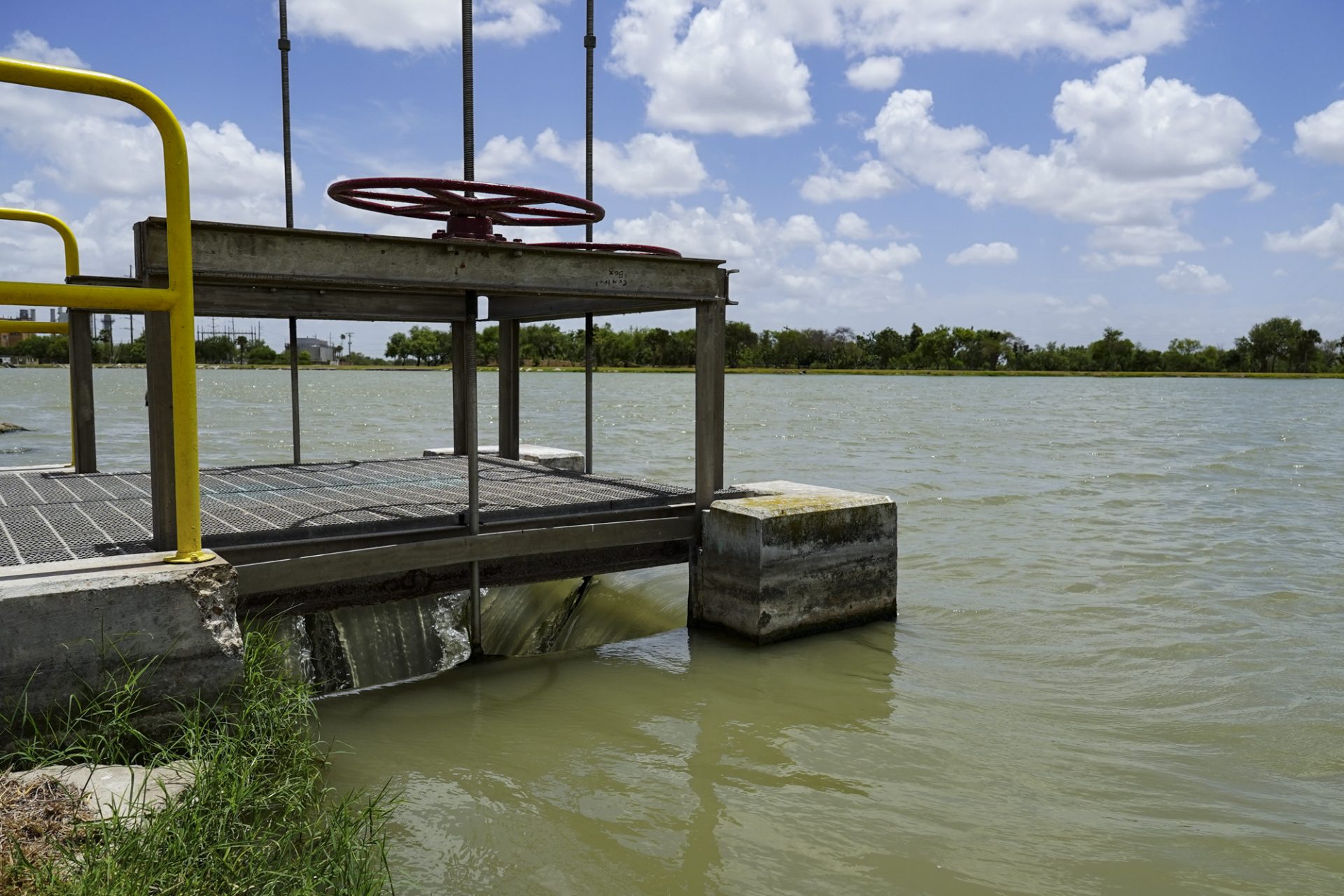
He said 30% of the roughly 22 million gallons Brownsville uses each day comes from the SRWA’s brackish water desalination plant, which filters aquifer water.
“The rest comes from the Rio Grande, which has long been a problematic source,” Hollmann said, because the water is shared with Mexico and its dams sit in high, dry desert areas.
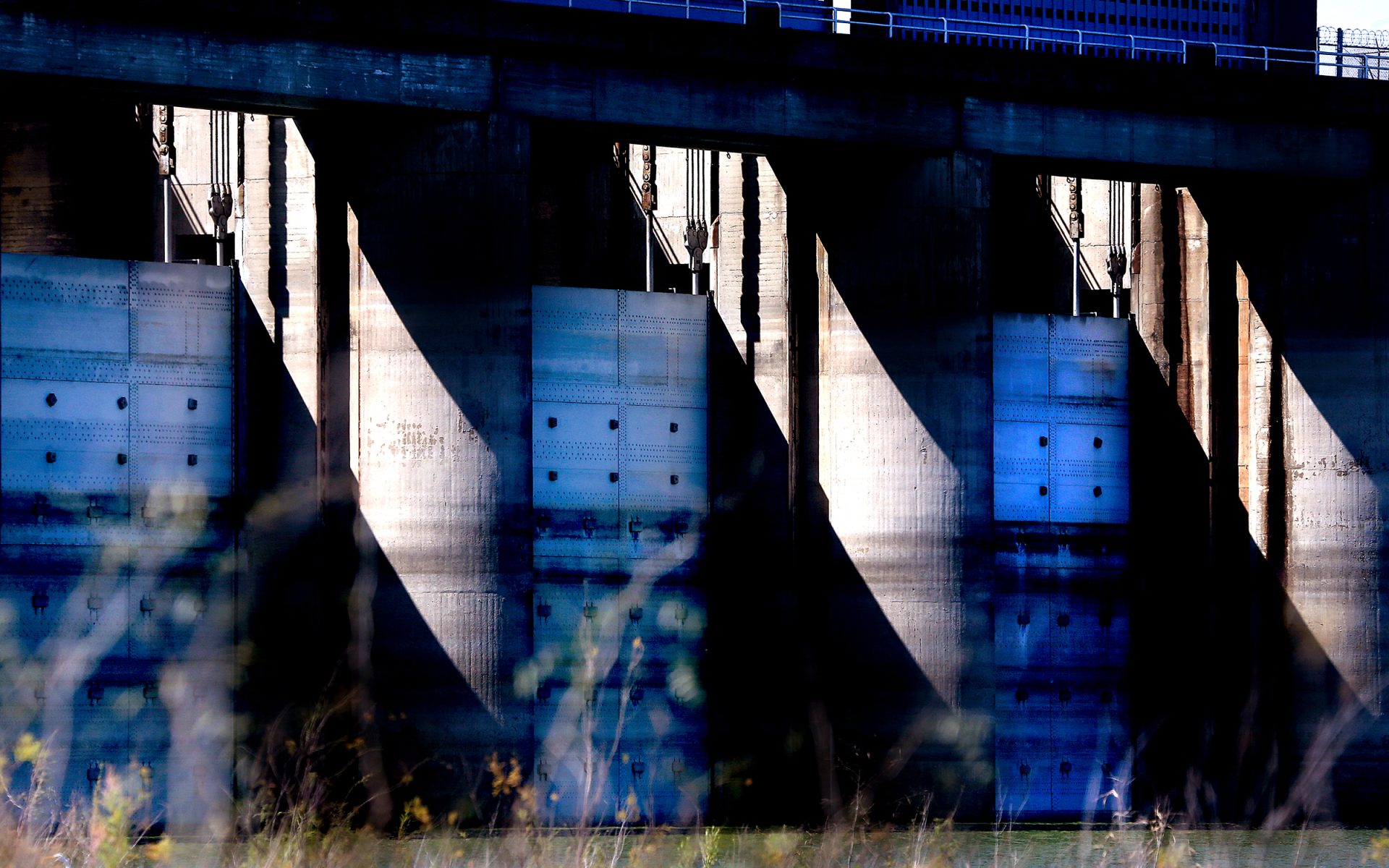
The Falcon and Amistad reservoirs are at about 23% and 38% capacity, respectively, as of Friday.
“(These projects) gives us a way to reduce our dependency on the Rio Grande River so that if things go wrong, which they do, we are still independent of that water source,” Hollmann said. “The idea that we could step back from worrying about what’s happening in the Rio Grande, what’s happening way out west in Falcon Dam, is extremely important.”
District 2 Commissioner Linda Macias asked Hollmann what the city’s other options would be to fund the water projects if it did not accept the SpaceX agreement. She noted that the city is expecting to grow by 25,000 more jobs over the next five years, with 800 homes and 26 subdivisions under development.
“I myself have a family, and I would never want for my neighbors, my friends, or our communities to be suffering (due to) not being able to have water,” she said.
Hollmann said that aside from choosing to do nothing, the other option is taking out a loan to pay for the facility expansion, the cost of which would be passed on to customers.
“Other communities have kicked the can down the road, and they’re paying for it now,” Hollmann said. “Our other option is to pray for rain in West Texas.”
Projects that will be funded under the agreement with SpaceX are Quantum Leap, referred to as Project Quantum on meeting agendas, because it will double Brownsville’s capacity for water production, City Attorney Will Treviño said.
The water reuse project, estimated at $40 million, is underway and will allow the BPUB wastewater treatment plant to produce an additional 8 million gallons per day of potable water. It has $12.7 million in funding from the Texas Water Development Board.
The optimization and expansion of the SRWA facilities is estimated at about $202 million. The project would increase its water production capacity from 7.5 million gallons per day to 10 million gallons per day through desalination plant upgrades and the reclamation and construction of water wells. It would eventually raise capacity to 20 million gallons per day.
The agreement between the city and SpaceX, which the public saw for the first time on Saturday, funds “qualifying projects” up to $220 million. The city did not respond to a request for a copy of that agreement.
Under the terms, SpaceX will deposit $40 million into an escrow account for the BPUB project within 30 days after the agreement is signed. The remaining funds are to be deposited in six quarterly installments of $30 million and dispersed based on project milestones, Treviño said.
“I will say that SpaceX has additionally offered the use of their engineers, as well,” Treviño told commissioners. “BPUB has engineers in house but with any project, they have other work that they are working on right now.”
The SRWA project is pending design and was not in the works previously because of lack of funding, Treviño said.
“BPUB is stepping up the gas to get the design and engineering done for that project,” he added.
SpaceX would have the right to a refund if no qualifying project was identified within a year of the initial escrow deposit, a process that includes a “written resolution naming the project, describing scope, and committing funding subject to milestones,” according to the presentation.
If all of the $220 million is not committed to the project within two years, SpaceX would be entitled to a refund of uncommitted funds and suspend pending payments.
Even after a refund, SpaceX would fund “identified projects” up to $220 million within seven years of the initial escrow deposit. Suspended payments will also resume if contract conditions are met.
No one is guaranteed water, Hollmann said, and water will go to residents first in the case of a shortage.
RAUCOUS MEETING
The meeting was tense leading up to the vote on the agreement, starting with opposing sides giving their support or opposition to the disannexation. Proponents were mostly from the business community, with most identifying themselves as part of the Greater Brownsville EDC.

Attendees applauded or booed speakers, depending on their side in the debate, and those describing SpaceX’s good intentions for Brownsville drew laughter from some in the crowd. Several opponents to the disannexation were told to leave or physically removed from the commission chamber for yelling questions or criticisms outside of public comment.
Annelise Rosas experienced decorum reaching its perhaps lowest point of the evening when a man exposed his buttocks in front of Rosas and her baby.
She was seated behind the man, whose upper buttocks were visible when he stood up at one point to applaud a SpaceX supporter, she said. After he sat down, someone behind her yelled at him to pull up his pants.
“He heard that, he stood back up, he pulled his pants all the way down,” Rosas told The Herald.
The man was removed by officers when she complained, she said, but only after her husband told officers that he had also seen the man flash his backside.
A Brownsville Police Department spokesperson confirmed that Anthony Frank Gomez was arrested Saturday at City Hall on suspicion of disorderly conduct, a Class C misdemeanor, in connection with the incident.
During public comment, residents repeatedly expressed concern over the breaking of procedural norms and possible environmental or health issues that could arise from SpaceX’s plans for the land.
District 4 resident Rosemary Martinez told commissioners that Starbase has its own governing body, and it’s not them.
“They want (the property) to be deannexed because they don’t want the city ordinances to apply,” Martinez told The Herald while commissioners were in executive session. “That begs the bigger question: Why? There’s a cost to us that hasn’t been quantified because we don’t know. If they build a data center, then you’re paying to build the infrastructure for the water that you’re gonna consume. You’re not doing it for us, you’re doing it for yourself.”

While officials reiterated their desire to maintain transparency, pointing to a press release sent to media on Aug. 24 with all available information about the proposed deal at the time, they couldn’t compensate for the lack of public input caused by the sheer speed of the deal.
During the meeting, SpaceX Vice President of Starship Legal and Regulatory Sheila McCorkle confirmed that SpaceX was under contract to purchase the disannexed land from a private owner. She did not provide specifics on how it would be used but said projected water usage for the project, plus all other commercial and residential operations in Starbase, is under 2 million gallons per day.
“As was mentioned many times, we are not guaranteed any water by BPUB through this agreement,” McCorkle said. “We would be in line like everyone else. They can commit what’s commercially reasonable based on their other commitments.”
The vote for disannexation came days before the commission’s Tuesday hearing on a proposed moratorium on data centers within city limits.
“Why are you blindly doing what that company asks you to? Why are you not being transparent?” Rosas, holding her baby on her hip, told commissioners during public comment. “Disannexing land for it to become a data center is a loophole that does not absolve you of responsibility. Yes, I’m assuming, but that’s all we have because no one is demanding answers.”
Commissioner At-Large “A” Tino Villarreal announced Monday that he would host a town hall on Sept. 9 to give members of the public a chance to ask more questions and discuss the agreement and annexation. It will be held at 6 p.m. at the Convention and Visitors Bureau Complex at 1312 E. Adams St.