|
Only have a minute? Listen instead |
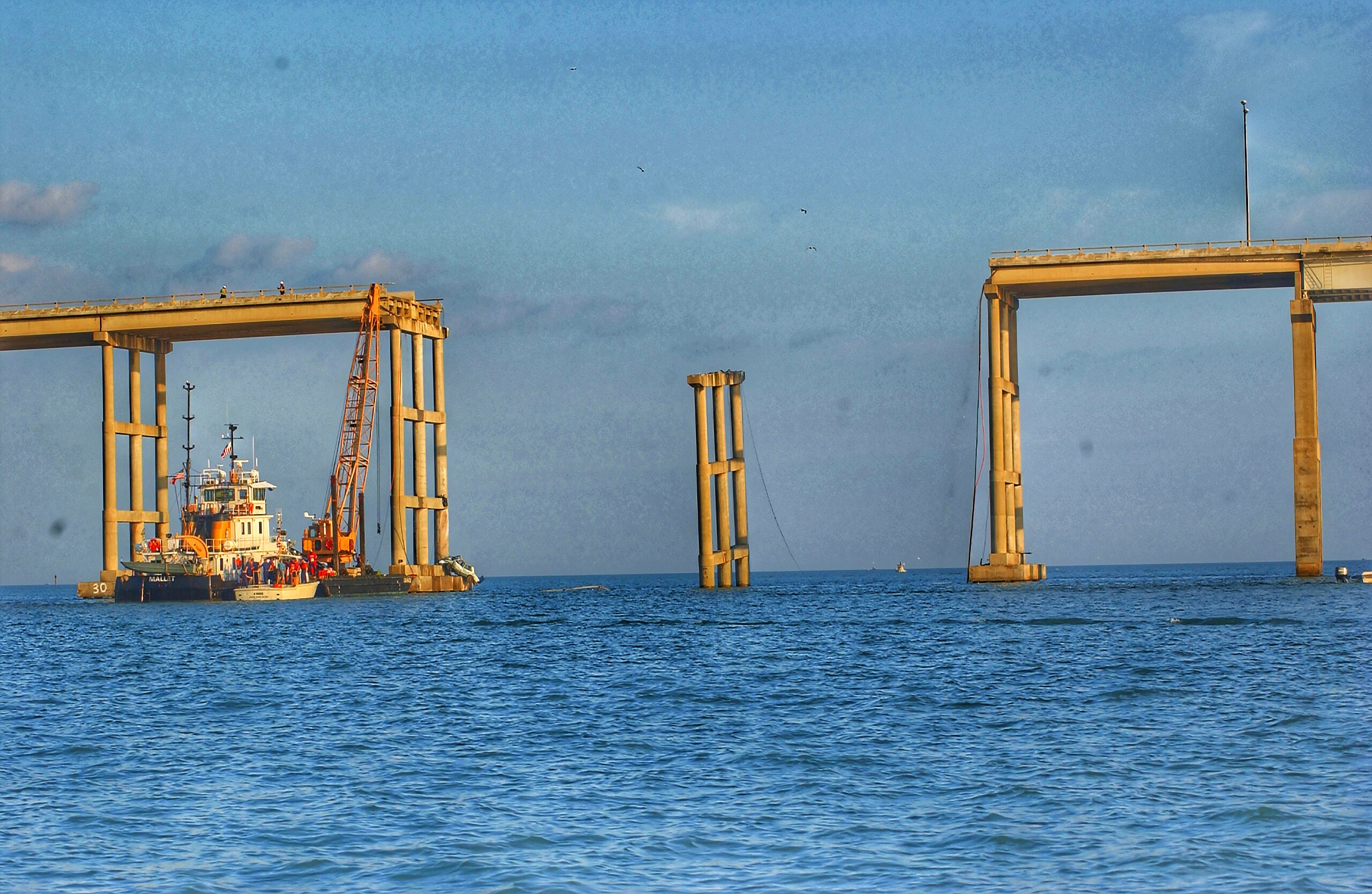
It’s clearly one of the most tragic weeks in our history. On Sept. 15, 2001 — just days after the unspeakable terrorist attacks of 9/11 — a tugboat pushing a string of barges through the Gulf Intracoastal Waterway slammed into a piling supporting the Queen Isabella Causeway, causing the two top sections to collapse. Because the fallen sections were at the apex of the bridge, drivers couldn’t see the gap until it was too late; 10 vehicles plunged into the Bahia Grande, and eight people died.
The break removed the only means of access to and from the island. Even though repairs were expedited, the causeway remained unusable until late November. In the meantime, fishing and dolphin-watching boats were reassigned to help ferry Island residents to and from work and school on the mainland. Party barges were brought in from Corpus Christi to help in the effort.
Even before the collapse, many Valley residents and officials were calling for a second causeway. They didn’t even think the one bridge might break — they cited the heavy traffic and the difficulty, and risk, the lack of alternate routes would create if residents had to evacuate quickly ahead of an oncoming storm.
A route had even been proposed, from Holly Beach to a point near municipal buildings at the north end of town.
After the tragedy, then-state Rep. Jim Solis filed legislation seeking state funding to help build a second causeway. His fellow lawmakers rejected the bill.
Twenty-five years later, the one span, renamed the Queen Isabella Memorial Bridge, remains the only means of access other than by boat. Yes, we still hear talk of a second causeway, but it’s not much different, or more serious, than that heard in 2001.
Nineteenth century French economist Frédéric Bastiat noted that decision makers need to be aware of both what is seen and what is not seen but might be foreseen.
“It often happens that the sweeter the first fruit of a habit is, the more bitter are the consequences,” he wrote.
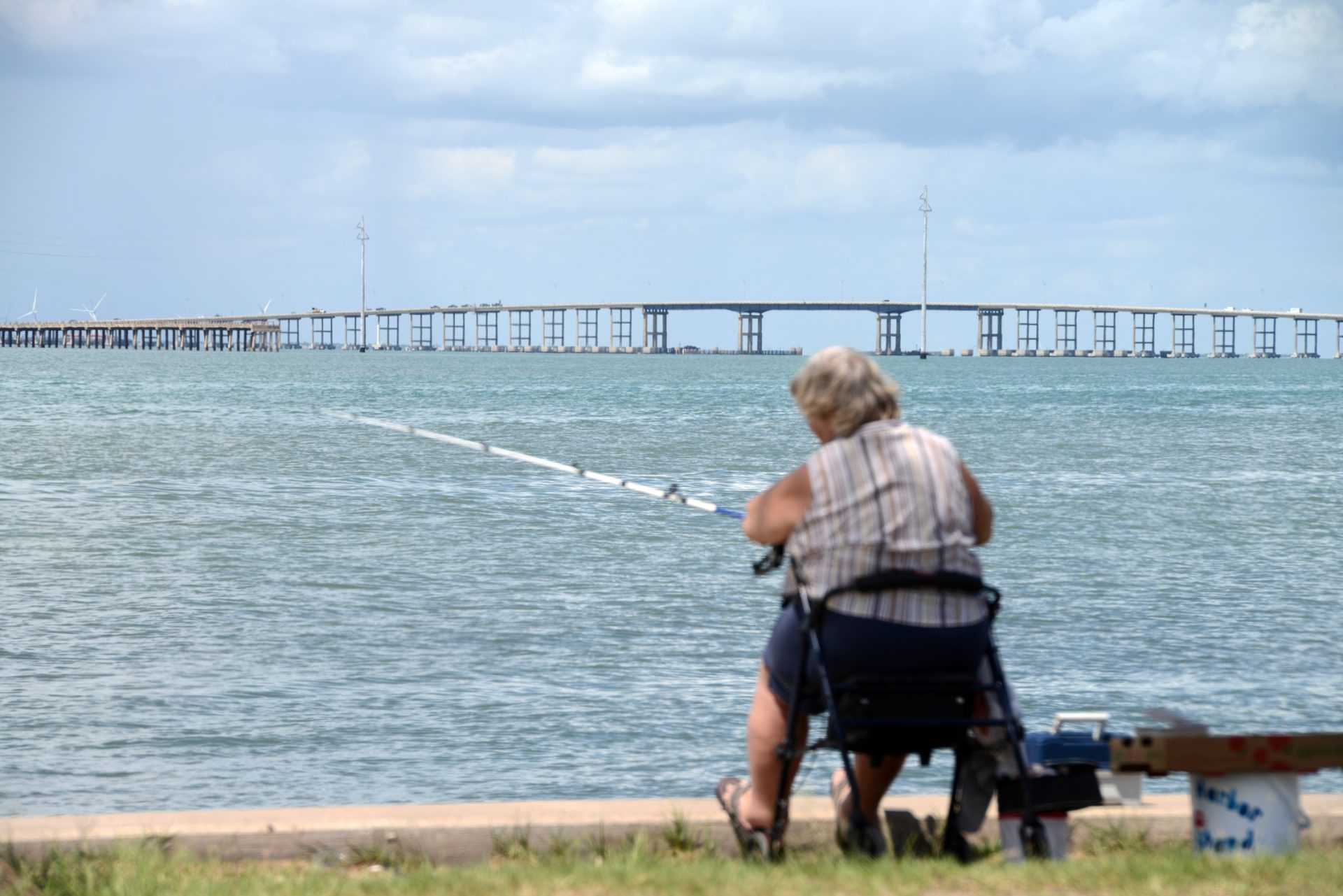
We know that taxpayers have not had to pay for a second causeway, but what has been the unseen cost?
How many injured and infirm island residents have suffered because emergency vehicles were delayed in getting to them, or getting them to medical centers on the mainland?
How much development has been lost because prospective residents decided the lack of access made living on the island too difficult?
How much revenue has Island business lost because people who wanted to go to the island decided they’d rather not spend much of their day sitting on the gridlocked bridge?
And how much have all these issues cost the city, county and state in potential property and sales tax revenue — revenue that might have been used to improve infrastructure, strengthen police and fire protection, improved public services or lower tax rates for the same level of services residents now receive?
A quarter-century has passed — an entire generation — since the 2001 causeway tragedy. What we do know is that the eight lives lost on that early Saturday morning weren’t enough to motivate our public officials to take action.
That might be the biggest tragedy of all.