|
Only have a minute? Listen instead |
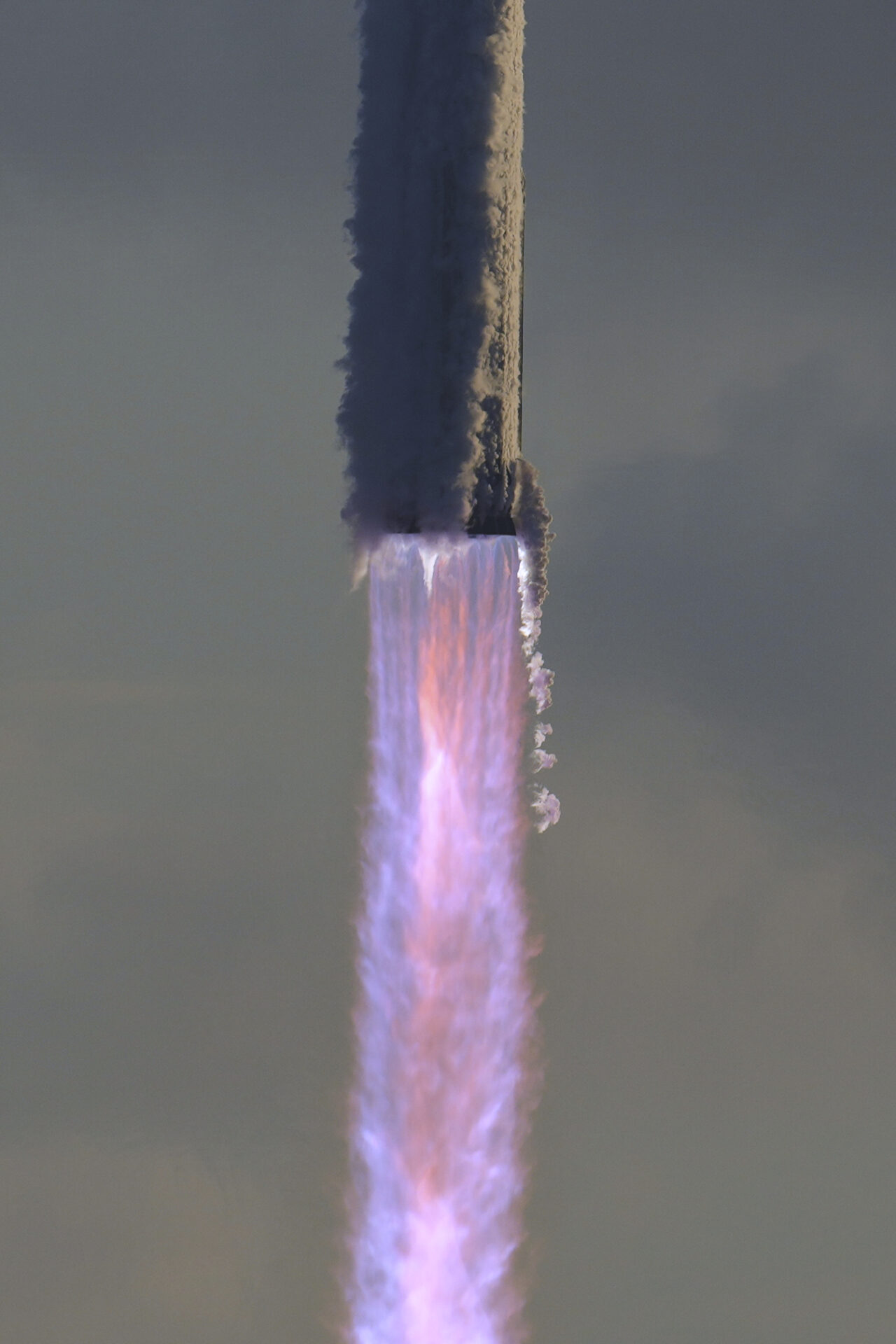
SpaceX launched Starship Flight 14 from Boca Chica at 7:49 a.m. Monday for an attempt at its first orbital test flight, initially expected to last nearly 10 hours before a planned splashdown in the South Pacific far off the coast of Chile.
It came close to not happening.
Previous flights of Starship have been suborbital. For Monday, SpaceX was aiming to make six orbits around the Earth at an altitude of approximately 170 miles, deploying 26 Starlink V3 satellites — actual satellites as opposed to dummies as with previous test flights — over a span of 30 minutes.
Starship accomplished stage separation at 7:51 a.m. from the Super Heavy booster a few minutes after launch, with Super Heavy making what appeared to “fairly soft splashdown” in the Gulf of Mexico just off Boca Chica Beach at 7:56 a.m., according to SpaceX live commentator Dan Huot.

A main objective for the first orbital Starship mission was the “orbital insertion” maneuver using one of the ship’s six engines to alter the vehicle’s trajectory to get into orbit, according to SpaceX.
The loss of one of Starship’s engines on ascent, however, prompted the ground team to consider abandoning the orbit attempt. Rather than a roughly 10-hour flight, Starship would instead land in the Indian Ocean about one hour after liftoff.
Following several minutes of troubleshooting by the ground team, 21 minutes following liftoff the decision was made to attempt orbital insertion using one Raptor engine after all.
“Starship will only execute a burn to enter orbit after the flight control team has ensured there is sufficient redundancy on hardware critical to doing the subsequent de-orbit burn at the end of the mission,” the company said.

A single Raptor engine will also be relit to conduct the de-orbit burn necessary to initiate descent before reentry and splashdown, according to SpaceX.
Huot described Flight 14 as the “most ambitious Starship launch to date.”
Twenty-six minutes following liftoff, the ground team announced: “Starship is in orbit”