
Subscribe to The Y’all — a weekly dispatch about the people, places and policies defining Texas, produced by Texas Tribune journalists living in communities across the state.
NEWTON — Roughly a billion federal dollars are pouring into Deep East Texas to improve access to high speed internet. Now, the question is how to help residents use it.
The Deep East Texas Council of Governments launched the Pineywoods Broadband Coalition, which will promote technology education and workforce development in the region, reflecting a larger statewide initiative to bring broadband and technology knowledge to the rural areas.
“Before we started this work, 50% of our region was underserved or unserved with high-speed broadband. We’re starting to see that table flip, and it’s good news,” said Connor Sadro, the broadband director for the council.
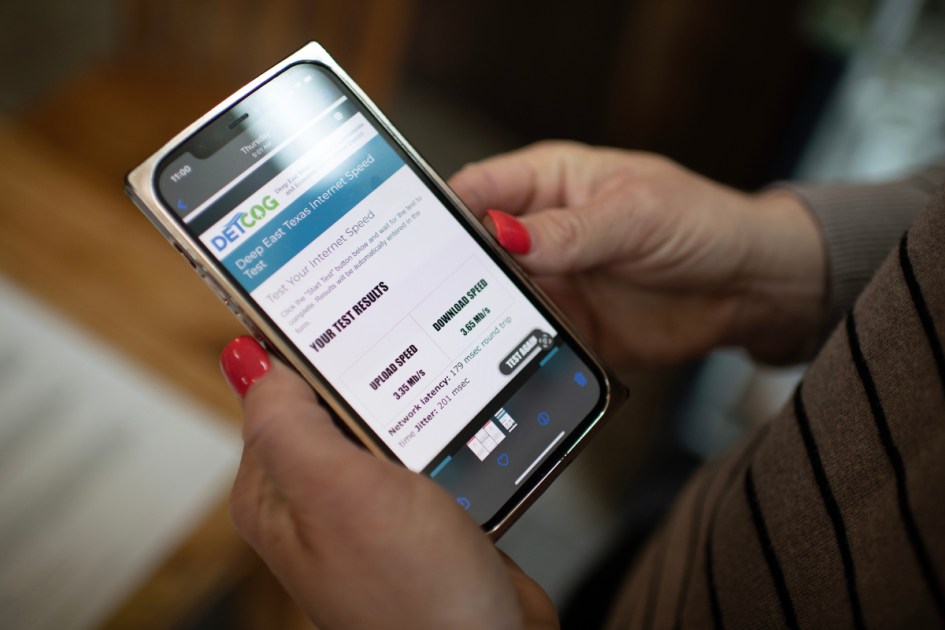
Internet connection is different for each community across the region. While some have full connection — they can conduct video calls or stream movies — others can barely get single websites to load on their phones or tablets, let alone access all the internet has to offer. This severely limits their access to resources such as telehealth or remote work.
The next few years could change all of that. As the region gains connectivity, Sadro wants to help people who weren’t previously connected to the internet to navigate it confidently. He also wants to make sure to prepare for any physical impact of these buildouts on aging infrastructure and make sure the workforce is ready for the thousands of jobs that access will open up.
Sadro said this initiative won’t cost the council anything at the outset, as it has resources and volunteers to take on the work. But as leaders develop plans, they may require funding, at which point, those leaders would seek local, state and federal grants to help pay for any incurred costs.
The first initiative of the coalition, digital navigation and adoption, would create training opportunities for people who have never had their own laptop before. This technology training would help the community learn basic computer operations, such as how to charge a laptop, get it started and basic computer troubleshooting. It would also teach them how to navigate things like telehealth appointments and video chats.
The second initiative is coordinated infrastructure and funding initiatives, which will help leaders deal with the physical impacts of broadband build-outs.
The high-speed internet grants the region has received cover a variety of types of access, including fiber optics and satellite internet such as Starlink. While access to Starlink won’t have a huge impact on physical infrastructure already in place in cities and rural areas, fiber will since it involves digging up the ground to install it.
Expanding fiber optic lines has already caused damage to water and gas lines, many of which were first installed in the 1970s and haven’t seen an upgrade since. The second initiative would bring together experts in that type of infrastructure to map out where utility lines currently exist so there’s less opportunity for disruptions.
The third initiative is economic development and workforce. If the council can successfully bring the entire region online, it opens up more jobs for locals. Those jobs could be anything from fiber optic splicers to opening up opportunities for people to get online certifications
“If we bring the internet to this region, if we fill that gap of 50% underserved and unserved then 10,000 jobs are on the table,” Sadro said.
The coalition’s launch came as the council celebrated the buildout of the first phase of a larger regional broadband network that started in Newton County. The network will eventually span six counties, but the first phase should be completed by the end of November, said Lonnie Hunt, executive director of DETCOG.
“More than half of the beneficiaries who will be served by this project are low-to-moderate income households,” Hunt said.
The first phase of this particular project costs about $9 million, which has been allocated from a $51 million grant from the Texas General Land Office Grant and a match from the T.L.L. Temple Foundation, which serves East Texas. The remaining $42 million will not be released until the next two phases are bid out, Sadro said.
The Newton project is one of several that are ongoing to expand connectivity since the council conducted a broadband study in 2019. That study has helped shape the region’s methods for expanding access to high speed internet and backed up grant applications.
The coalition was proposed and approved by the council’s board of directors at a Thursday meeting in October. The board is composed of community leaders, such as city council members and county judges, from across 11 counties.
Sadro hopes this pool of individuals will either step up to lead or suggest the right person for the job to support the region as it goes through these infrastructure changes.
Disclosure: T.L.L. Temple Foundation has been a financial supporter of The Texas Tribune within the past five years. The Texas Tribune is a nonprofit, nonpartisan news organization that is funded in part by donations from members, foundations and corporate sponsors. Financial supporters play no role in our journalism. Find a complete list of them and more information about our financial and disclosure policies here.
Source link