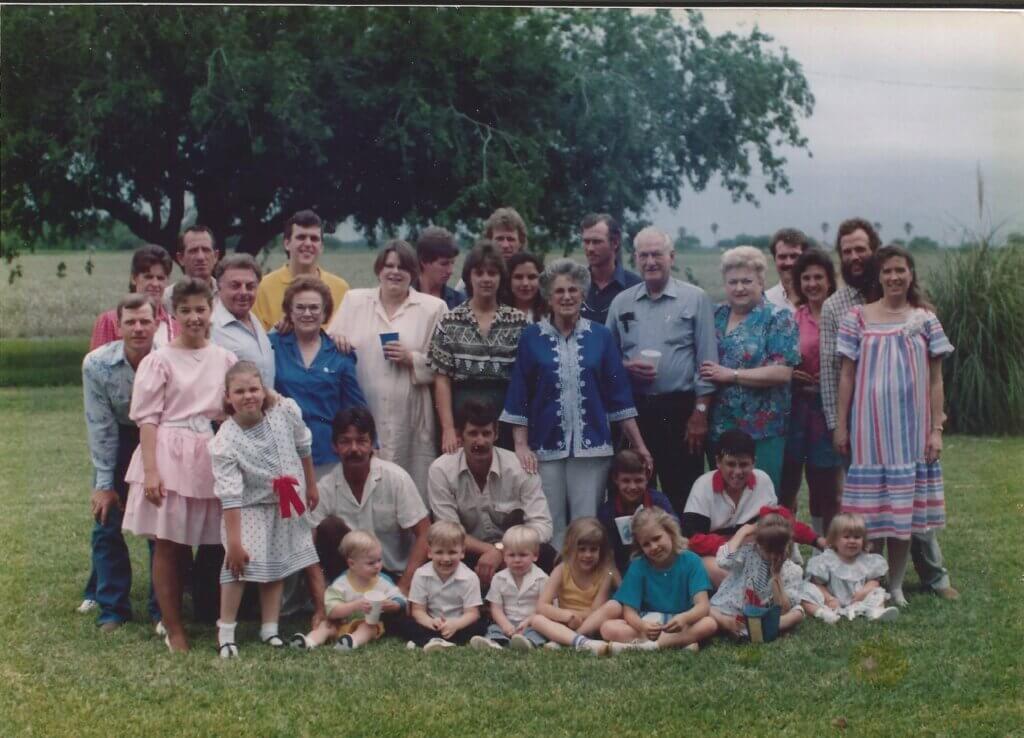
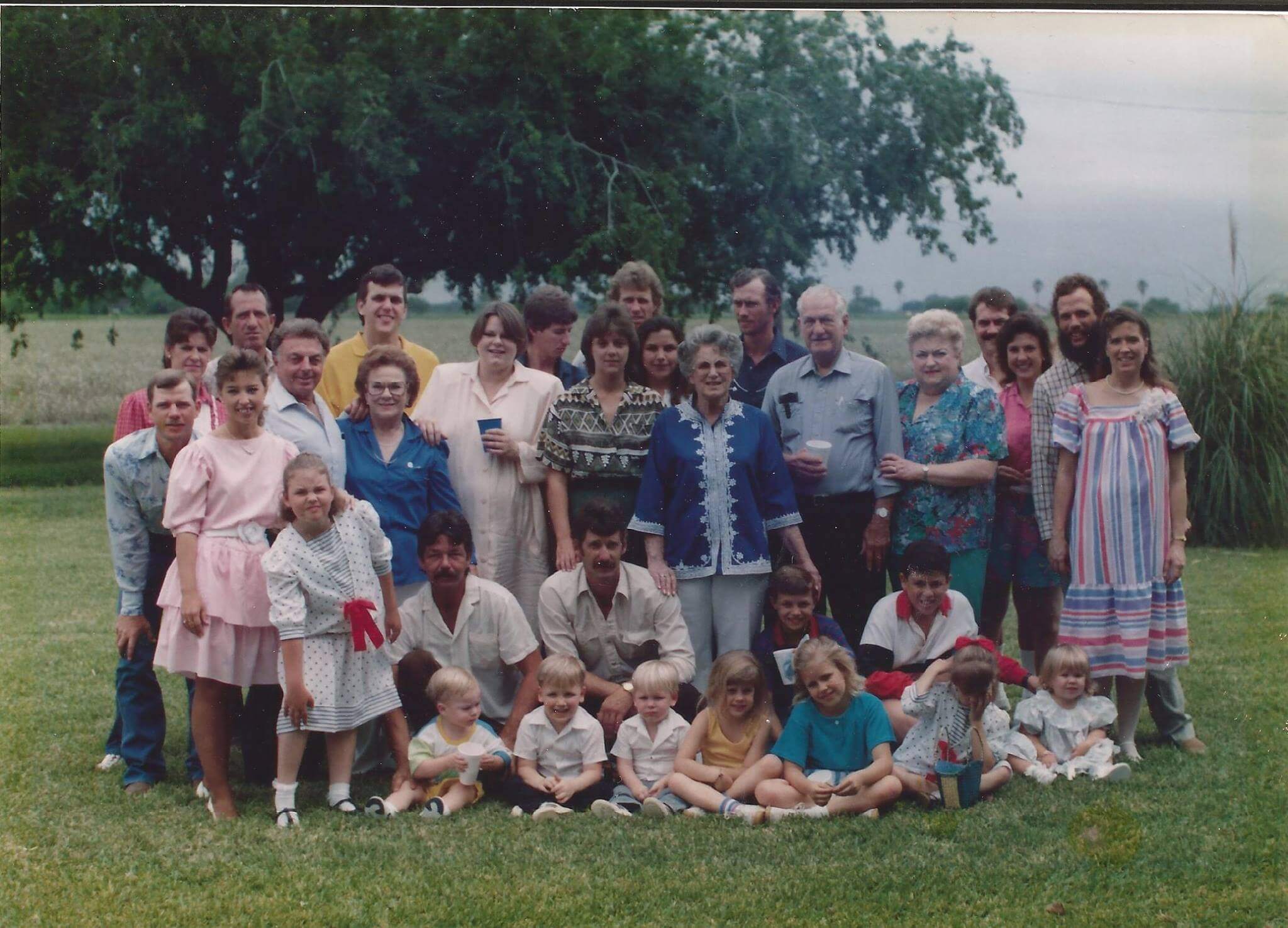
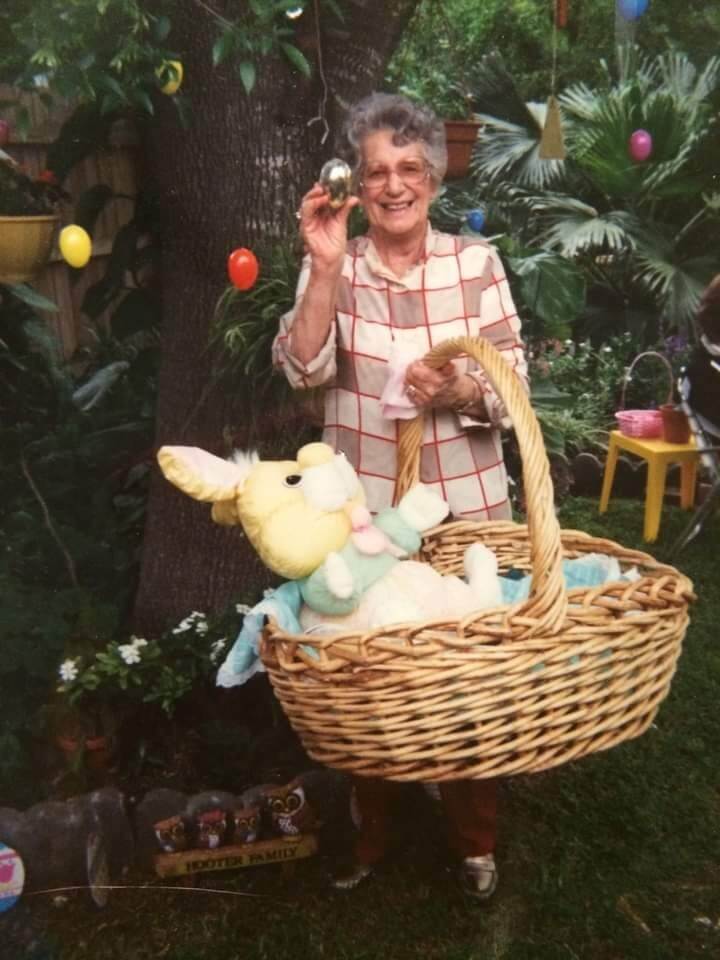
(Courtesy photos/Eric A. Crabtree)
By ERIC A. CRABTREE
Special to the NEWS
The first time eggs became gold or golden at Easter was during the later reign of Louis XIV (the Sun King, r. 1643–1715).
It became a tradition to decorate ostrich eggs from the Versailles Zoo with gold leaf for presentation to the court. In the 18th century, the first Fabergé Imperial Egg, known as the “Hen Egg,” was created by Peter Carl Fabergé in 1885.
This one-of-a-kind Russian artwork was designed for Russia’s Tsar Alexander III as an Easter 1885 gift for his wife, Empress Maria Feodorovna.
Fast-forward to 1946, the 20th century. A Valley resident named Mildred Doris (Hance) Witt discovered and purchased a metallic Easter egg, which began a much-loved family tradition that reached 80 consecutive years in 2026.
It is Easter Sunday, April 21, 1946. Spring had sprung a month earlier, on March 20. World War II had ended seven months earlier. Uncles who served in the military, Charles Bernard “Ben” Witt, Norman Gerald Hance, Richard “Dick” Cornelius McQueeney, and Douglas Fairbanks Hance, all returned home safely.
These proud, heroic Hance relatives made sacrifices in their efforts and triumphed over totalitarian dictatorships worldwide.
To celebrate the end of wartime austerity in America and Easter, Mildred Doris (Hance) Witt, one of seven children of Valley pioneers, Denver C. Hance and Eula M. (Trimm) Hance, ventured across the Rio Grande Valley to find something special to commemorate Easter for her two children.
Her children were daughter Ester Jeannine (Witt) Thomass/Earley, age nine, and son Charles Wayne “Buddy” Witt, age seven. Plastic-hinged Easter Eggs, which are common today, were not invented until 48 years later, in 1978, by Donald Weder.
Their father, “Ben,” had been away, serving his country as a U.S. Navy Underwater Sea Diver in various wartime operations. The children had not spent Easter with him for many years.
Mildred set out to find a special treat and finally purchased the Golden “Victory” Easter egg. The symbolism and glimmering gold of her discovered Golden “Victory” Egg represented the end of WWII and the resurrection and triumph of Lord Jesus Christ over death.
The war had eggs rationed across the country, and every egg was valuable.
Good times were back, and Easter egg hunts had started up again. The sun shone, and that 1946 Easter was going to be incredibly special to everybody. Aunt Mildred saw to it that it would be so for all.
Little did Aunt Mildred know on that Easter Sunday, 80 years ago, that she launched a much-loved and cherished Easter family tradition, first within her own family and then spreading to become a tradition among Hance family descendants that still holds true today.
This egg and the Easter egg hunt tradition have continued without interruption since 1946.
The family tradition now allows the family to claim bragging rights for the first Golden Easter Egg, the first hunt, and the ongoing tradition in the Rio Grande Valley and across the United States of America.
The family is currently applying to Guinness World Records.
From 1946 through the present, including 2026, the Golden “Victory” Easter egg, or its replica since 1995, has been hunted at every family Easter celebration.
Within the family, Easter Sunday gatherings alternated between Ben and Mildred Witt’s home and the grandparents’ Denver Cecil Hance (Papaw) and Eula Mae (Trimm) Hance’s “Big Mama” House and Farm, still located off FM 509 in San Benito.
In 1969, it was also hosted at Cecil Earley and Jean Laverne (Hance) Earley/Nesmith’s old home in La Feria.
Over the years, cousins and sisters brought real dyed Easter eggs to hunt. The thrill was not only beating out all the relatives by finding the most eggs, but also finding the elusive Golden “Victory” Easter egg.
That was just the icing on the cake. This writer can recall Cousin Melanie (Earley) Heaton finding it one year, and another year, yes, I almost found it and stumbled upon it, but Cousin Lila Jo (Smith) Witt got there before I did.
For the kids, the excitement and anticipation of going out to find all those eggs were always high. Most of the girls and some of the boys were dressed in Easter finery.
Back in the day, winners typically received a grand toy from Aunt Mildred for finding the Golden Egg. Smaller toys were also awarded for the most eggs found, and a much smaller one for the fewest.
Even today, families cannot imagine an Easter egg hunt without that Golden Easter “Victory” Egg, and people can now honor and thank the Witt/Hance Families for starting this holiday tradition for all.
After the grandparents passed away, the Golden Egg and Hunts returned permanently to the Witt home, where they had lived from the mid-1970s to the early 1990s.
Uncle Ben passed away in 1991, so Aunt Mildred sold their homestead, but the family tradition continued.
The 1990s were graciously taken over for several years afterward by their grandson, Bruce Randall Thomas, and his wife, Connie Dian (Hees) Thomas / Fitzgerald, along with their family.
Aunt Jean always arrived after church with a bucket of Kentucky Fried Chicken for the Easter celebration.
Aunt Mildred’s famous noodles, Aunt Opal Hance’s incredible carrot cake, and cousins Sonny and Jeannine (Witt) Earley’s tea were all enjoyed.
Yes, there were deviled eggs and whole dyed eggs to eat.
The two exceptions to the Easter Sunday family gatherings held elsewhere were in 1994 and 1995. Cecil Earley had passed away years earlier, and Aunt Jean remarried Mark Nesmith.
Uncle Mark had established a new fishing home on the Arroyo Colorado River between San Benito and Los Fresnos. It was at this 1994 celebration that the Nesmiths hosted Easter for the families, and that was when the original Golden “Victory Easter Egg” was last hunted.
The egg cracked after 48 years of continuous use. The egg also chipped, and the gold was no longer golden. It had honorably served its purpose of fun and excitement. Renee Lynn (Crabtree) Clark, some cousins, and this writer decided this egg needed to be retired and replaced with a replica.
The newer version of the Golden “Victory” Easter egg was introduced in 1995.
It was a store-bought plastic Golden Egg used at mom’s, Maurietta “Rita” June (Hance) Crabtree event. Mom had graciously hosted the event, and she never held another. Although mom loved all her relatives, she did not like her prized backyard garden trampled by all the egg hunters.
Mom’s second love was her backyard garden, a place where she found solitude, therapy, and happiness, growing flowers and plants in her later years.
She once quipped, “Yeah, I am dating a man, his name?? – ‘Pete Moss.’”
That year, at mom’s celebration for the families, this writer finally found that elusive Golden “Victory” Easter egg! That was mainly thanks to hints from this writer’s nephew, Dalton Lane Clark (RIP).
In 1996, the Golden “Victory” Easter egg was created to mark its 50th year. Sister Renee had it encased in an acrylic box mounted on a pedestal base, with a small plaque that read, “In Honor of ‘Mimi’ – The Golden Easter Egg: 1946-1996.”
We presented this honor to Mildred in 1996 at Bruce and Connie’s place, where the tradition continued.
Family members still fondly recall gathering that Easter, where there were tears of happiness and joy from everyone. That original Golden WWII Celebration “Victory” Easter egg was retired and enshrined, but oh, what fun and memories.
From 1996 to today, most descendants have scattered across Texas and the U.S., starting new lives with new traditions, but always keeping that Golden “Victory” Easter egg as part of their tradition, heritage, and hunts.
This past Easter marked the 80th year of that 1946 post-war Easter gift that Aunt Mildred purchased out of love for her kids, and that is now loved by eight generations and counting.
Family members continue to cherish her memory, that Golden “Victory” Easter egg, the hunts, and most of all, they are keeping this historic tradition alive within their own families.
Happy Hunting!