
|
Only have a minute? Listen instead |
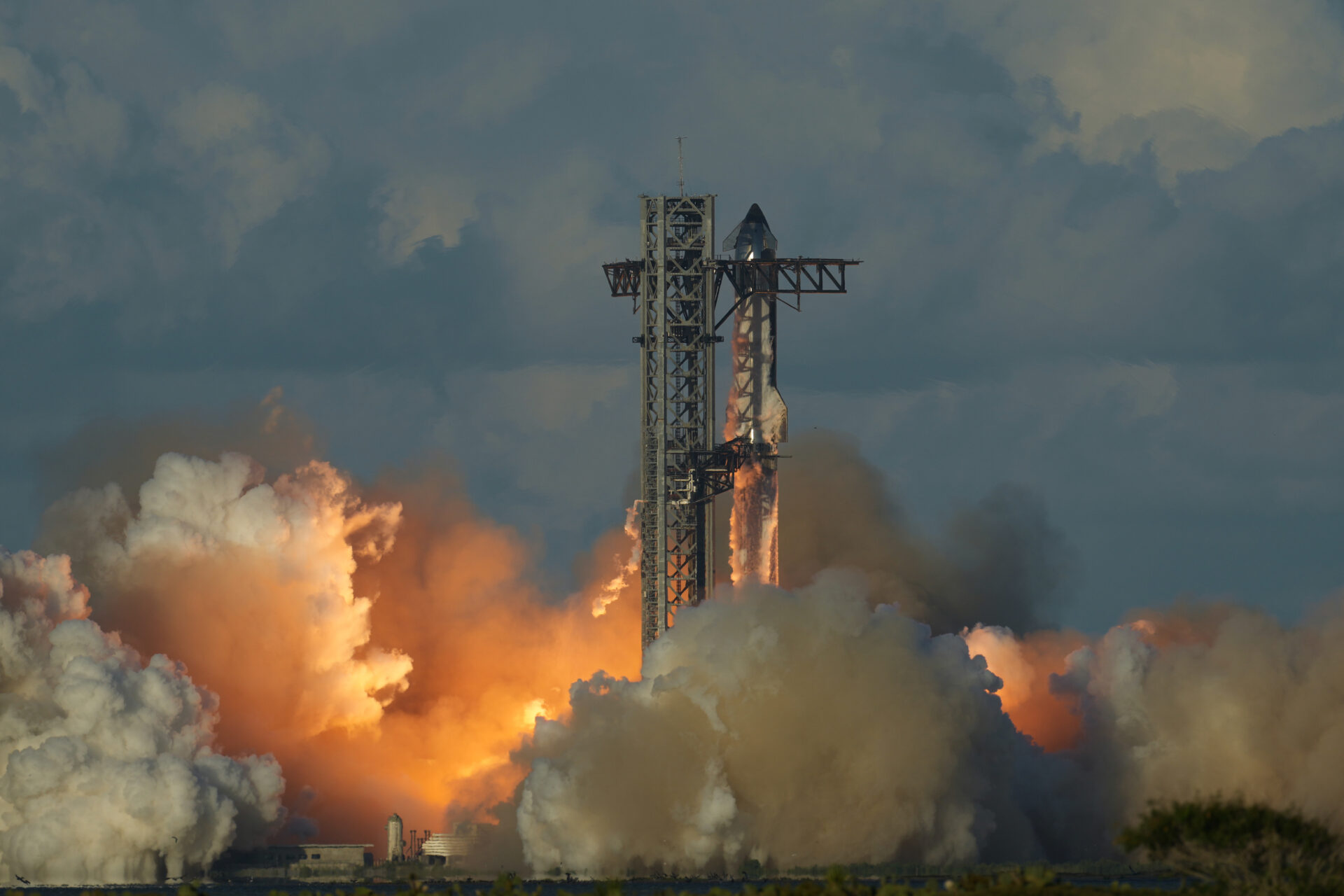
SpaceX has pushed back the launch of its V3 Starship S39 and Super Heavy B19 booster from Boca Chica twice this week, the newest target date being May 21 with the launch window opening at 5:30 p.m.
The city of Starbase on Monday announced the closure of Boca Chica Beach from noon to 11:59 p.m. Tuesday, from 6 a.m. to 11 p.m. on Wednesday, and from 6 a.m. to 11 p.m. on Thursday.
“As is the case with all developmental testing, the schedule is dynamic and likely to change,” SpaceX said on its website.
The delays also follow a workplace death at SpaceX that occurred last Friday.
The company said the next flight will debut its “next-generation Starship and Super Heavy vehicles” fitted with the latest version of SpaceX’s Raptor engines. The Starship test flight, which will take place from a newly designed pad, is the first from Boca Chica since Oct. 13.
SpaceX said the chief goal of the pending suborbital test flight will be to demonstrate the new hardware in a flight environment for the first time. Each element of the “Starship architecture” has been substantially redesigned based on years of development and testing, with the aim of enabling “full and rapid reuse,” according to the company.
For the 33-engine Super Heavy booster, the main objectives of the test flight will be a successful launch and stage separation from Starship, “boostback” engine burn to redirect the booster toward its landing zone, and landing engine burn to splashdown in the Gulf of Mexico.
“As this is the first flight test of a significantly redesigned vehicle, the booster will not attempt a return to the launch site for catch,” SpaceX said.
The company pulled off post-flight booster retrieval at the launch tower during three previous test flights last year.
The upper-stage Starship will attempt in-space tasks including deploying 20 simulated SpaceX Starlink satellites, plus two modified Starlink satellites that will test hardware planned for the newest version of Starlink. The satellites also will also attempt to scan Starship’s heat shield during reentry and transmit the images to ground control, part of finding methods to analyze whether the heat shield is ready for later attempts to return Starship to the launch site, which has not been attempted.
“For (Flight 12) Starship entry, a single heat shield tile has been intentionally removed to measure the aerodynamic load differences on adjacent tiles when there is a tile missing,” SpaceX said.
Starship S39 also will attempt to replicate experimental maneuvers accomplished on prior test flights, including deliberately stressing the structural limits of the vehicle’s rear flaps, plus a “dynamic banking maneuver to mimic the trajectory that future missions returning to Starbase will fly,” according to the company.
Starship will also again attempt to relight one of the vehicle’s six Raptor engines while in space, SpaceX said.
The company said Starship V3 “incorporates a clean-sheet redesign of its propulsion systems.”
“These changes enable a new Raptor startup method, increase propellant tank volume, and improve the reaction control system used for steering while in flight,” the company said. “The propulsion updates also reduce contained volumes in the aft end of the vehicle that could trap propellant leakage.”
A live-stream video of Flight 12 will be available about 45 minutes before launch at spacex.com.