
Subscribe to The Y’all — a weekly dispatch about the people, places and policies defining Texas, produced by Texas Tribune journalists living in communities across the state.
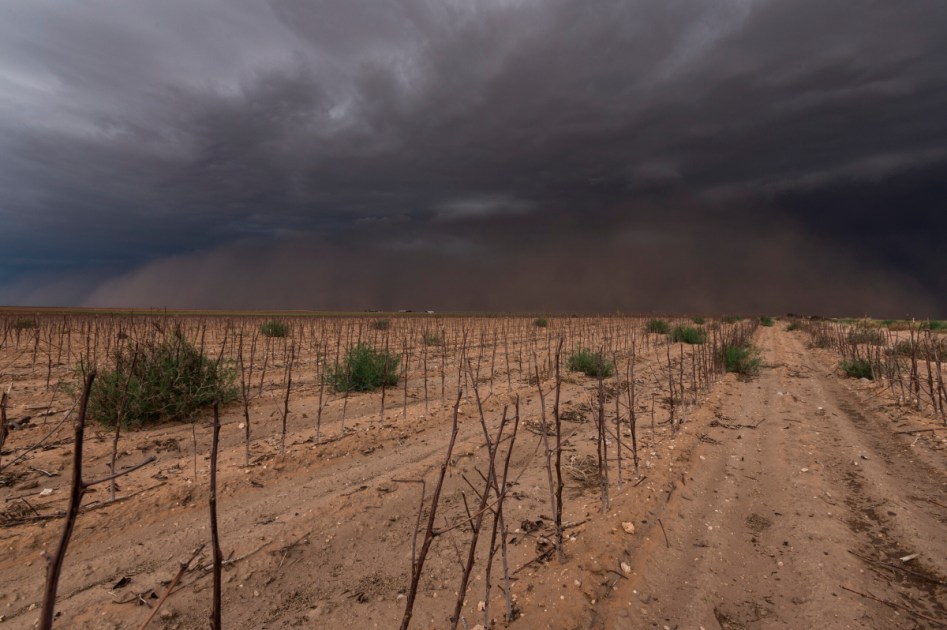
McALLEN — Texas heat can be relentless. For much of the year, farmers and ranchers were preparing for a tough summer of drought.
As of Monday, nearly 50% of the state was experiencing some level of drought conditions according to the U.S. Drought Monitor. This time last year, about 36% of the state experienced similar conditions.
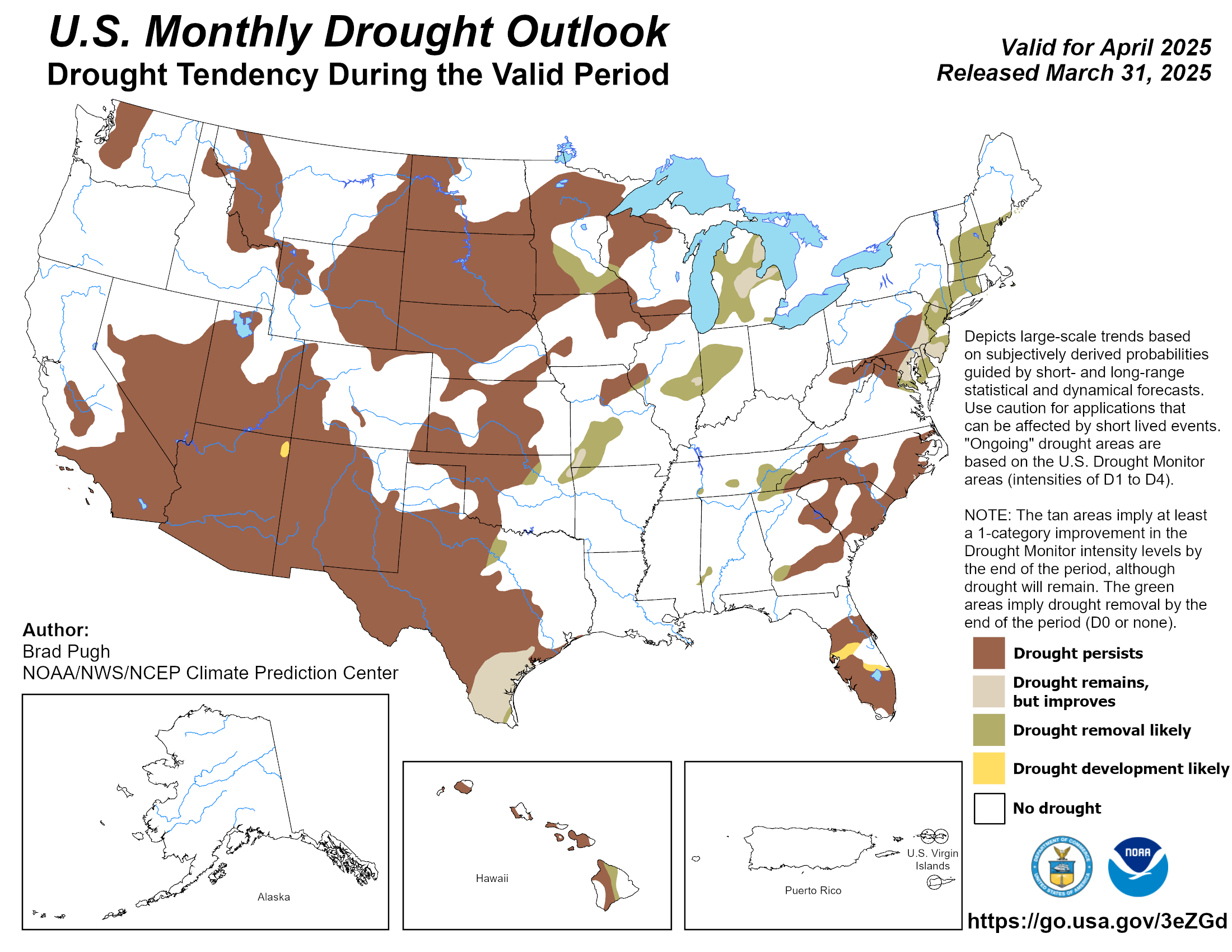
Areas of Texas have seen several wet days during May. But it likely won’t be enough to change conditions across most of the state, according to an updated federal outlook published May 31. Drought is expected to improve but remain in much of the Panhandle. Drought is expected to persist across most of South Texas.
Texas’ water supply is already under stress from growth and aging infrastructure. Climate instability and a hot summer put the state’s supply in greater peril. That is particularly bad news for the state’s agricultural economy, which uses a significant amount of the state’s water.
Some 700 miles south of the Panhandle, the produce industry is bracing for a hard season. While not in drought — yet — if predictions are correct, the Rio Grande Valley’s produce industry could be down a total of 40% of their typical fruit and vegetable plantings due to drier weather later this summer.
The region typically grows between 60 to 80 million acres of fresh produce every year, but that has declined over the past four years due to lack of available water, said Dante Galeazzi, CEO and president of the Texas International Produce Association.
Last year, the lack of water availability led to a 30% drop in fruit and vegetable plantings, Galeazzi said. This year, plantings are expected to drop another 10%.
“As we go longer and longer without water, our folks get into a more dire position,” Galeazzi said.
Galeazzi said It becomes difficult for producers to secure a loan from a bank or maintain business with grocery stores when projections don’t indicate an improvement in their ability to grow product.
Weather predictions
This year, drought has been more widespread than it has been for the last three years, said John Nielsen-Gammon, a climatologist and director of the Southern Regional Climate Center. added. In fact, the last time it was as widespread as it is now was in 2022. That year, conditions remained dry through the first or second week of August.
However, Nielsen-Gammon noted that because Texas is a large state, conditions can vary widely from one region to another and it’s unlikely that drought will be as widespread as it was in 2022.
The dry conditions that are expected to linger throughout the summer can be attributed to the weather phenomenon known as El Niño.
An El Niño climate event refers to the warming of the ocean surface waters in the central and eastern tropical Pacific Ocean. One is expected to develop over the next few months and bring rain starting in mid- to late- October.
But before then, El Niño suppresses hurricane activity in the North Atlantic, meaning we could see fewer tropical storms and hurricanes due to El Niño, Nielsen-Gammon said.
Forecasting this far out is difficult. The forecast could shift significantly if warmer temperatures than normal in the tropical Atlantic could counteract the current trend, allowing for the possibility of a normal season, after all, Nielsen-Gammon added.
Right now, the climate is in a neutral phase when neither El Niño or El Niña is active. The month of June is a bit of a wildcard, in terms of how much precipitation there will be in the South Texas region, said Barry Goldsmith, a meteorologist with the National Weather Service – Brownsville.
Conditions currently look like they will lean dry. For July and August, confidence is pretty solid that those months will be drier than average for all of Texas.
“Those are two of our driest months on the calendar, and that’s based on El Niño becoming not only underway but more robust,” he said.
While El Nino could bring rainfall in the fall, as Nielsen-Gammon indicated, Goldsmith said the earliest the Valley would see above average precipitation would be in November and even that is not guaranteed.
“Remember, that’s one of our drier parts of the calendar,” Goldsmith said.
Impacts of rain
The rainfall that has fallen across the Rio Grande Valley region in April and May has helped South Texas growers extend the plantings of their leafy greens such as cilantro, parsley and kale. It has also been beneficial for the citrus industry, which is entirely based in the Valley, as citrus trees need water every 30 days, Galeazzi said.
But these rains typically only provide short-term benefits. For rain to bring substantial relief, it needs to fall over the international reservoirs where the region’s water supply sits.
Drought has caused water levels at the two international reservoirs, which are shared by the U.S. and Mexico and feed water into the Rio Grande, to be only slightly above record lows.
That’s a devastating problem for the Valley, which depends on the Rio Grande for 90% of its water supply. This low water has added friction between the U.S. and Mexico, which both agreed to share the river’s water resources through a 1944 international water treaty. Drought on both sides of the border has contributed to Mexico’s inability to meet its treaty obligations, though the two countries have engaged in smaller, side agreements to encourage Mexico to make up their water deficit.
“Those low storage numbers mean that we are likely looking at a very challenging season for next year as well, unless we get some beneficial rain this summer over those dams,” Galeazzi said.
Drought has already had deep impacts on the agriculture sector. At least one producer in the Valley had to sell off hundreds of acres, Galeazzi said, adding that another company with operations the Valley and West Texas laid off at least 50 employees at both sites. . But it doesn’t just end with agriculture. The effects are felt throughout an entire ecosystem.
That downsizing creates a domino effect, Galeazzi pointed out, because less produce means farmers are buying fewer seeds, boxes and pallets. They also require fewer salespeople, fewer warehouses to store the products, and fewer truck drivers to transport them.
Reporting in the Rio Grande Valley is supported in part by the Methodist Healthcare Ministries of South Texas, Inc.
Source link