KERR COUNTY — Alicia Baker can’t bring herself to clean her daughter’s bedroom.
Eleven-year-old Madelyn “Emmy” Jeffrey left a pile of craft supplies on the floor in their San Antonio home before heading off to the Guadalupe River with her grandparents, where they drowned in the flood last Fourth of July.
A year later, the pile is still there.
Baker, who wears a diamond made from her daughter’s ashes, said seeing the mess allows her to pretend her daughter is away at camp or traveling.
“If all of her things are gone then I can’t rationalize that anymore,” the 43-year-old said.
When the Guadalupe River swelled into a huge, raging waterway in the early morning hours of July 4 last year, it carved a horrific path of destruction. Baker’s daughter and parents, staying at their one-bedroom vacation house by the water, died along with 116 others in Kerr County.

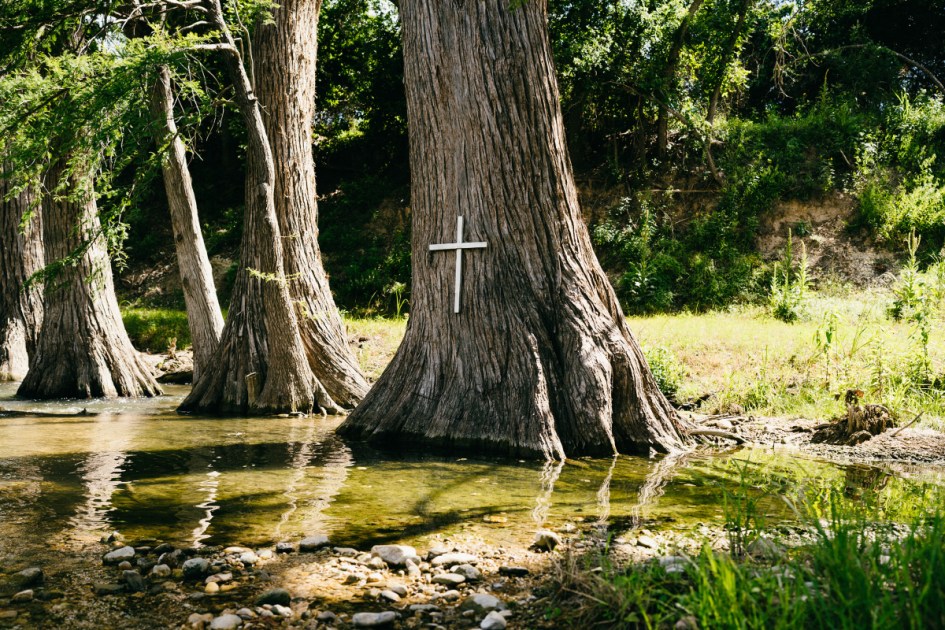
The raging flood toppled old cypress trees that shaded the emerald water where generations of families swam. It washed away cars and entire houses. As one person there put it, the area looked like a bomb had gone off.
Nearly one year later, after months of cleanup and rebuilding, people are still grappling with how to heal both physically and emotionally. The Federal Emergency Management Agency approved only slightly more than a fifth of the several thousand applications from Kerr County for assistance, according to a nonprofit tracking the data. The local community foundation meanwhile doled out millions to groups helping people buy new homes or RVs or rebuild. Others still haven’t decided what to do with their land.
Signs of normalcy have reemerged: Crider’s Rodeo and Dance Hall on the river rebuilt in time for its 101st summer season. The Hunt post office, where even the 1,400-pound safe washed away, is going back up, and the Ingram Little League has new fields to play on. Summer camps welcomed back children, eager to keep the magic alive even after 27 girls at Camp Mystic died in the flood.
People returned to the river, to fish, to kayak, to play.
Reminders of the flood linger. The iconic Hunt Store and River Inn remain closed. Camp Mystic is shuttered and last week filed for bankruptcy. More than 90 new flood warning sirens that the directors of Camp Mystic raised money for stand ready to blare while six sirens expected to be paid for with state funds have been installed.


Many say they feel nervous when it rains or haunted by the sounds of screams they heard that night. “Y’ALL OK?” ask yard signs around town that encourage people to seek help. Others carry overwhelming grief of losing a loved one. “Live Like Jane,” says a banner on a fence in memory of one victim, camp director Jane Ragsdale. Small crosses by the river marked the places some Mystic campers were found.
“We are not recovered,” said Austin Dickson, chief executive officer of the Community Foundation of the Texas Hill Country. “We are in recovery, and there is much more work to be done.”

In the months after the flood, when Baker would go by her family property, she would sit on the ledge by the water and reflect on how calm it was. She felt, in those moments, a familiar peace. This was the river she grew up going to camp by and where she and her husband got engaged.
Her fiercely spirited daughter was spending the July 4 holiday with her adoring grandparents. Grandma Penny Jeffrey taught yoga to other seniors and Grandpa Emlyn Jeffrey regularly golfed, dialing his daughters every time he left the course to say he loved them. They picked up Emmy after every day of fifth grade so she could be in safety patrol, helping other kids get to and from car drop-offs. Soon Emmy would start middle school, where she couldn’t wait to learn debate and play sports.
In the early evening on July 3, before eating brisket her grandpa made, Emmy FaceTimed with her mother, who planned to drive out to the river house with her husband and baby in two days. The house, raised on stilts, seemed better prepared to withstand the flood, but the river, choked with debris that included entire houses, swept it away, too.
Seven months later, Baker said she didn’t let herself think too much about what happened because she didn’t want to get stuck in those negative feelings. She still had her baby and husband to get out of bed for. She celebrated her mom’s 70th birthday as they’d planned, going to the Macy’s Thanksgiving Day Parade in New York without her. She made Emmy’s 12th birthday pancakes in December without her.
Looking at the river, Baker felt betrayed. How could she still love a place that violently took three people she cherished?
“There are two truths,” Baker said. “This bad thing happened, but it is not a bad place.”
Living with grief
People have lived with the loss in different ways. Joseph Rounsley, 40, kept working, finding comfort getting away to the taxidermy supply store where he’d started helping with tasks such as mowing the grass and prepping hides at age 10. He kept the business running, maybe taking orders for mannequins for deer heads or sheep eyeballs.
But Rounsley couldn’t forget how he watched his brother, 27-year-old Julian Ryan, die during the flood, when their mom called Rounsley on FaceTime. Ryan and his mom, Marilyn Ryan, along with Ryan’s girlfriend, her son and their baby, were stuck in a bedroom of his mom’s mobile home near the river as it filled with water on July 4. The children floated on a mattress. The mom thought they would all drown.
Julian Ryan punched through a window to try to help them escape. He turned to his mom, white as a ghost. Blood gushed from a wound on the inside of his elbow. His mom slapped him to try to keep him alive, screaming.

“I watched him say he loves us, he’s not going to make it,” recalled Rounsley, who lived in Kerrville and couldn’t get to them.
Julian Ryan lost too much blood. His mother held his body as the water in the mobile home neared the ceiling and finally went down. “He’s my forever hero,” she said.
Now Rounsley had to keep going without his athletic, outgoing brother who loved hot wings and Corona. They would no longer go fishing together. Ryan would no longer cheer at middle school football games for Rounsley’s son.
After the flood, which ruined the floor of his own house too, Rounsley and his son moved in with his mom in a donated AirBnb in Kerrville. The scene of his brother dying kept replaying in his mind, keeping him from sleep. Marilyn Ryan, 57, eventually went back to her job as a caregiver for her former neighbor. They both got tattoos in his memory.
In March, grant money and their own GoFundMe helped with a down payment on a new home in Kerrville, far from the river. His mom wanted to stay close to Julian’s grave.
Rounsley hung a portrait of Julian just inside the entry. They arranged other framed photos of the family with him on a table below it.
“We’ll never celebrate Fourth of July again,” Rounsley said.
* * *
In the neighboring city of Ingram, the restaurant and bar where Ryan worked reopened but the adjoining RV park behind it remained empty.
Lorena Guillen, 55, and her husband bought the site as a retirement project several years ago. They rented 54 sites in the RV park to short- and long-term tenants, who became a community. The couple took over the restaurant, called Howdy’s, when existing operators moved out. Guillen taught employees her recipes, including her Texas whiskey pork belly chunks.
On June 30 of last year, she and her husband had finally paid off their investment in the restaurant and became profitable, she said.
“This place was rocking; sometimes you couldn’t find a table on a Friday or a Saturday night, and it was crazy,” Guillen said. “And then Fourth of July happened.”
July 3 was an amazing day. A customer recorded a video of people dancing while a band played in the sunlight on the patio at Howdy’s, which is decorated like a honky tonk. Some in the video would be among more than 30 people who died that night at the RV park next door, HTR TX Hill Country.
Guillen remembers being awakened by the red and blue of flashing emergency lights early on July 4.


Rousing her husband, Guillen hurried outside to find the roiling river rising. A family was stuck on the RV park’s island, where she loved to walk her dog. Her husband tried to help them across a small pedestrian bridge to safety. They had two children with them. He urged them to throw one to him, but they couldn’t.
In a moment, the river rose like a wave and swept them all away. Her husband’s flashlight lanyard caught on what he thinks was rebar, which saved him. Only later did he tell Guillen what happened to him.
Months passed helping tenants file FEMA claims and working with search and recovery before Guillen saw a psychiatrist. Her anger was taking a toll on her marriage and her employees at Howdy’s. She panicked if she ever saw someone walk to the island with children.
At her damaged home the night after the flood, she noticed the silence without RV park guests lighting fires or playing music. She and her husband eventually moved to Bandera, about a 30-minute drive away, but she couldn’t leave her customers altogether and she had a mortgage to pay. She’s thinking about putting an amphitheater and flea market where the RV park used to be — nothing to be used overnight.
“It’s a beautiful place,” she said. “How can we walk away?”
Deciding to stay
Survivors of the flood all had to make choices: Should they rebuild? Should they move? Could they love the river again?
James Trolinger, 61, and Brenda Espinoza, 57, decided to stay. They lived in a home low on the slope of a hill behind the main road that winds along the Guadalupe River from Ingram. The couple woke on July 4 after a warning call from a neighbor and found their floors wet.
The river tumbled their furniture and covered their floors and counters in inches of mud. They wearily retold their story of loss in order to get donated gift cards. They built back their wardrobes largely with donated clothes. Eventually, they moved into another neighbor’s empty house and committed to rebuilding.

The land mattered to them because it had been in Trolinger’s family for more than a century. Trolinger and Espinoza had met decades ago when he worked as an undercover narcotics officer for the Kerr County Sheriff’s Office and she was a dispatcher at the Kerrville Police Department. They reconnected and had early dates fixing up the house and sitting around the fire pit. They married on the deck in 2021. Together, they ran a restaurant.
Now Trolinger learned to dry out the home and use disinfecting spray to prevent mold. The couple saved some of Trolinger’s uniforms. A volunteer helped Espinoza search for her missing charm bracelet with a metal detector, and, when they couldn’t find it, she returned with a new one.
“I can’t keep living in fear,” Espinoza decided.
The two got back into their home by April. When it storms, Espinoza does puzzles or adult coloring books to calm down. Sometimes she wakes up screaming, afraid to touch her feet to the floor.
She still hasn’t walked down to the river.
* * *
Not far away, Michelle “Coach” McGuire, 57, lived with friends for the first few weeks. She’d woken July 4 to the sound of her house creaking under the pressure of the flood and reached for her phone to find her bedside table floating. Was this a nightmare?
The former high school volleyball and basketball coach rented her house in Hunt starting in 2023. She’d already been in the area for seven years, spending some of those summers coaching at nearby Camp Waldemar. Just the day before the flood, she’d been out fishing, feeling grateful for where she lived.
The frigid river swept McGuire away. She clung to a wall, then a tree.

McGuire told God she didn’t want her mom to bury her. Rescuers later found her on that tree limb some 30 feet up in the air, alive, wearing the t-shirt and shorts she’d slept in.
McGuire, who is Catholic, couldn’t believe the crucifix she wore on a thin chain still hung from her neck.
Immediately, her pastor sent someone to check on her. People gave her clothes and money. Friends loaned her their car and one offered her the use of the house of a grandparent who had moved to assisted living.
McGuire never thought about leaving; her friends here felt like family. She worked as a caregiver for a woman in her 80s and didn’t want to abandon her either.
Grant money let her buy the house where she was staying, the first one she’s owned, built on a hill where she felt safe. She invited her friends for monthly game nights.
She’d seen her life hanging in the balance. Never a warm and fuzzy person, she started to hug a little more, even more grateful for what she had.
“My story is a message of hope,” she tells people who ask her to share what happened.
Back in business
The river didn’t just destroy homes. More than 300 businesses needed help after the flood. They’ve been supported by grants, no-interest loans and donations, but it isn’t always enough.
Brother and sister Neal Secor, 55, who lives in Boerne, and Mandi Secor Lipscomb, 49, who lives in Austin own a cluster of riverside cabins called Waltonia on the River, built on land that has been in the family for a century. The water rose an astounding 50 feet on the property, according to a surveyor. But everyone got out the night of the flood, thanks to a renter whose family had been coming there for generations who was watching the river and raised the alarm.
“I was just really in shock,” Lipscomb said. “I couldn’t believe that it had really happened.”

The brother and sister demolished seven damaged cabins, with cleanup help from the Ingram football team and Secor’s friends from the construction business, among others. Churches provided trays of food for the many volunteers. Friends helped Lipscomb research grants and a guest started a GoFundMe to pay for rebuilding.
Not until February did they know they would be able to open again this summer. They’re down to five guest cabins, three of them refurbished. That’s as far as the money got them.
“I think a lot of us haven’t had a chance to even process emotion,” Secor said. “We’re too busy trying to get it back to something.”
Their great-grandfather had first built a fishing retreat at the site to teach others about land management. The siblings grew up there. They remember how families used to stay up late playing ping pong, and how their grandparents would host the adults for card games and flick the pavilion lights off outside to signal quiet time. All that remains of the family home now is the chimney.
They wanted to protect this legacy even if it didn’t make financial sense.
“We can’t be the ones to blow it,” Lipscomb said.
***
Scott Towery, 67, still lives surrounded by the damage at River Inn — historic condos he manages near the headwaters of the south fork of the river that owners often rented. He was the first person in Kerr County to dial 911 to warn about the flood. One visitor there died on July 4 as Towery tried to evacuate guests up the hill, before boosting people up onto the roof.
The condo owners in November voted to rebuild the units just as they were, rather than sell, and they’re waiting for architectural designs. The owners are all helping to pay for the work. July 4 bunting still hangs outside.
One unit owner sold without coming back for their family’s things. Towery and his wife decided to move to a house across the street. It took them months before they could even talk to each other about the disaster.

But Towery can tell many guests and owners are eager to return. He fielded constant calls after the flood from people wondering when they can book a room again. He expects owners and renters to be able to return at the start of 2028.
He updated his voicemail: “Currently we are not operable and it will be some time before we will continue our operations. Please bear with us during this difficult time.”
Recently, the iconic concrete slide next to the river got fixed. So did the small dam that creates their swimming hole. In May, workers dug 5,500 tons of rock and sediment out of the river, leaving one large limestone rock to remember the disaster by. He’s planned to get outdoor lights redone next.
“That makes you feel like you’re doing something,” Towery said.
Glimpsing hope
At Crider’s Rodeo and Dance Hall, the fading light on the second Friday in June illuminated smiling faces and long hugs. Kids ran across the new dance floor. A musician strummed her guitar.
Owner Tracy Moore had been at the restaurant since around 8 a.m., cooking beans and okra, prepping her tartar sauce and cleaning her fryer. As the restaurant opened, Moore warmly welcomed guests. They included retired lawyer Ross Rommel, 78, whose family took him to Crider’s as a baby. Years later, he and his wife Deborah, 77, used to come here to dance the cotton eyed joe.
“We have Crider’s back,” Deborah said, smiling.


Courtney Compton and her husband Brian, both 49, had worked for Moore here, he as a bouncer and she as a bartender. They’d married on the property in 2011.
“It’s so good to be back,” Compton said, to no one in particular, as she looked around.
More than four feet of water had flooded Crider’s. When Moore saw the damage later that morning, she shut the door and walked away, not ready to deal with it. But she knew they would rebuild. Eventually they powerwashed and sanded the wood from the walls, pieced the counter back together and tried to scrub the floodline from the windows.
Cut from the metal beneath the new bathroom sinks are the words: “DANCIN’ FOR NAYNAY” — a tribute to the daughter of Moore’s niece who died at Camp Mystic.
“It’s been a long haul,” Moore had said. She explained that they could never have recovered like they did without the time, work and financial and emotional help from Crider’s generations of supporters. She felt glad to be open again.
Businessman John Dunn walked to a table to wait for his catfish.
“The emergence of Crider’s at this time, in the absence of everything else in Hunt that you would normally have, is special,” Dunn said.
Dunn and his wife Vikki, who moved here from Houston, had bought another nearby local landmark, the Hunt Store, in 2013, wanting to be part of a place that defined the town. The hamburger spot, with its river stone walls and cedar posts, was a community gathering place; it hosted steak nights and pizza nights, and an employee in his 80s opened the store at 7 a.m. for the old-timers and others to get their coffee.
Dunn and his wife sold the store several years ago, but kept living in the community.
The flood stripped away much of the store’s walls. Dunn served as president of the Hunt Preservation Society, which then helped with recovery. Now he and his wife are also leading the store’s rebuild.
Instead of “Hunt Store,” the letters near the roof now say “Hunt Strong.”
“What are you going to do?” Vikki Dunn said. “You’ve got to rebuild.”
* * *
The next day, a sunny Saturday morning at Camp Waldemar on the North Fork of the Guadalupe River, some 300 girls from fourth through 11th grades rode horses, swam and fenced, while their field day teammates cheered.
Here, the cypress trees still had their bark. Bugs and birds sang. Here, spared from the worst rains, no one had died and no cabins with campers had flooded.
Waldemar owner Meg Clark knows other camps with fewer resources face challenges greater than her own. Waldemar is steeped in a legacy of generations of families sending their daughters to the secluded spot on the river, sometimes signing them up at birth. Even after the flood, their high retention rate only fell by a few percentage points for the second term.


Because of the state’s new camp safety laws, Clark built six new cabins among the others on a hill. The camp boosted its emergency supplies, buying more generators, radios and backup food and water. All full-time staff went through trauma-informed training and CPR training. They’re partnered with their own meteorologist.
But Clark is well aware that some camps didn’t reopen this summer, including Camp Mystic. She’s among those, including many who live locally, who feel like the focus after the tragedy has been only on Camp Mystic and missed the broader story of the other lives lost and the larger toll.
For Clark, it matters for kids to have a place without phones and do cartwheels on the lawn, where they can learn basic life skills and be themselves apart from the social pressures of school. At Waldemar, girls have to make their bed and pick up the trash and raise the flag. They have to learn to be comfortable with being uncomfortable.
“This has to keep going,” Clark said. “It has to keep going.”

Source link