In 2007, a 20-year-old Lionel Messi posed for a Barcelona charity calendar, gently bathing a baby in a plastic tub. The baby’s family had won a UNICEF raffle. Nobody thought about the photo again for 17 years.
The baby was Lamine Yamal.
You could write fiction for a decade and never come up with that. On Sunday at the World Cup final in New Jersey, the greatest player of all time faces the teenager many believe will inherit the title, and there’s photographic evidence that Messi literally held him first. Both came through La Masia. Both wore No. 19 at Barcelona before switching to the 10. The soccer gods stopped being subtle a long time ago.
Somehow, the two teams are just as compelling as the two stars.
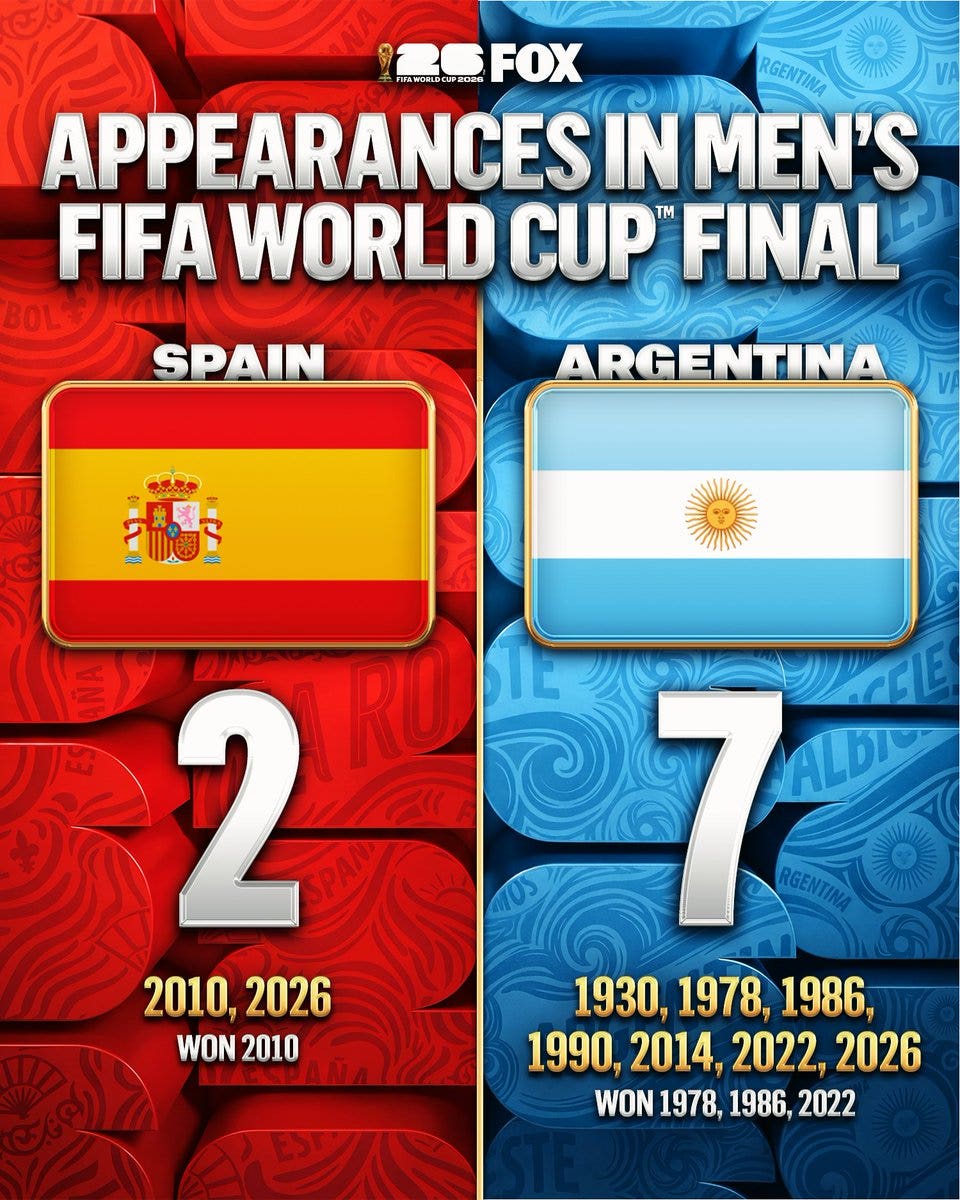
Start with the history, because there’s barely any. Spain and Argentina have met once at a World Cup, a 1966 group-stage game that Argentina won 2-1 behind a Luis Artime brace. They’ve never met in a knockout match. The all-time series is deadlocked at six wins apiece. This year’s Finalissima was supposed to settle things in March before it was called off, so instead the reigning European and South American champions will meet for the first time in World Cup final history, with the biggest trophy in sports on the table. Fine. That works too.
The paths could not look more different. Spain dismantled France 2-0, making the tournament’s most feared attack look ordinary. This is the best possession team in the world, and more importantly, the team with the clearest identity in the sport. In an era where so many teams press and build up the same way, Spain still looks unmistakably like Spain. That’s worth something in a one-off final.
And the names driving it aren’t the ones anyone predicted. Yamal has one goal all tournament, scored back on matchday two, which would have sounded like a crisis in May and instead describes a finalist. Mikel Oyarzabal leads the team in scoring and buried the penalty that broke France. Rodri looked like the 2024 Ballon d’Or winner again, conducting business in the midfield. Behind him, the wall: Pau Cubarsí and Aymeric Laporte have conceded once in seven matches, Unai Simón set a World Cup clean sheet record, and the fullbacks have been a cheat code on either end. Marc Cucurella erased Kylian Mbappé for 90 minutes, while Pedro Porro scored the nail in the coffin.
Argentina, meanwhile, has stumbled through the knockouts like a heavyweight who keeps getting up: 3-2 over Cape Verde, 3-2 over Egypt, 3-1 over Switzerland in extra time, and now 2-1 over England after trailing in the 85th minute. No team had ever scored multiple stoppage-time winners in a single World Cup. Argentina now has. At some point, “lucky” stops being the word and “inevitable” takes over.
The Albiceleste’s engine is a 39-year-old. Messi assisted both goals against England, has scored eight times in the tournament, and keeps rewriting the record books weekly. His legs have aged. His brain hasn’t.
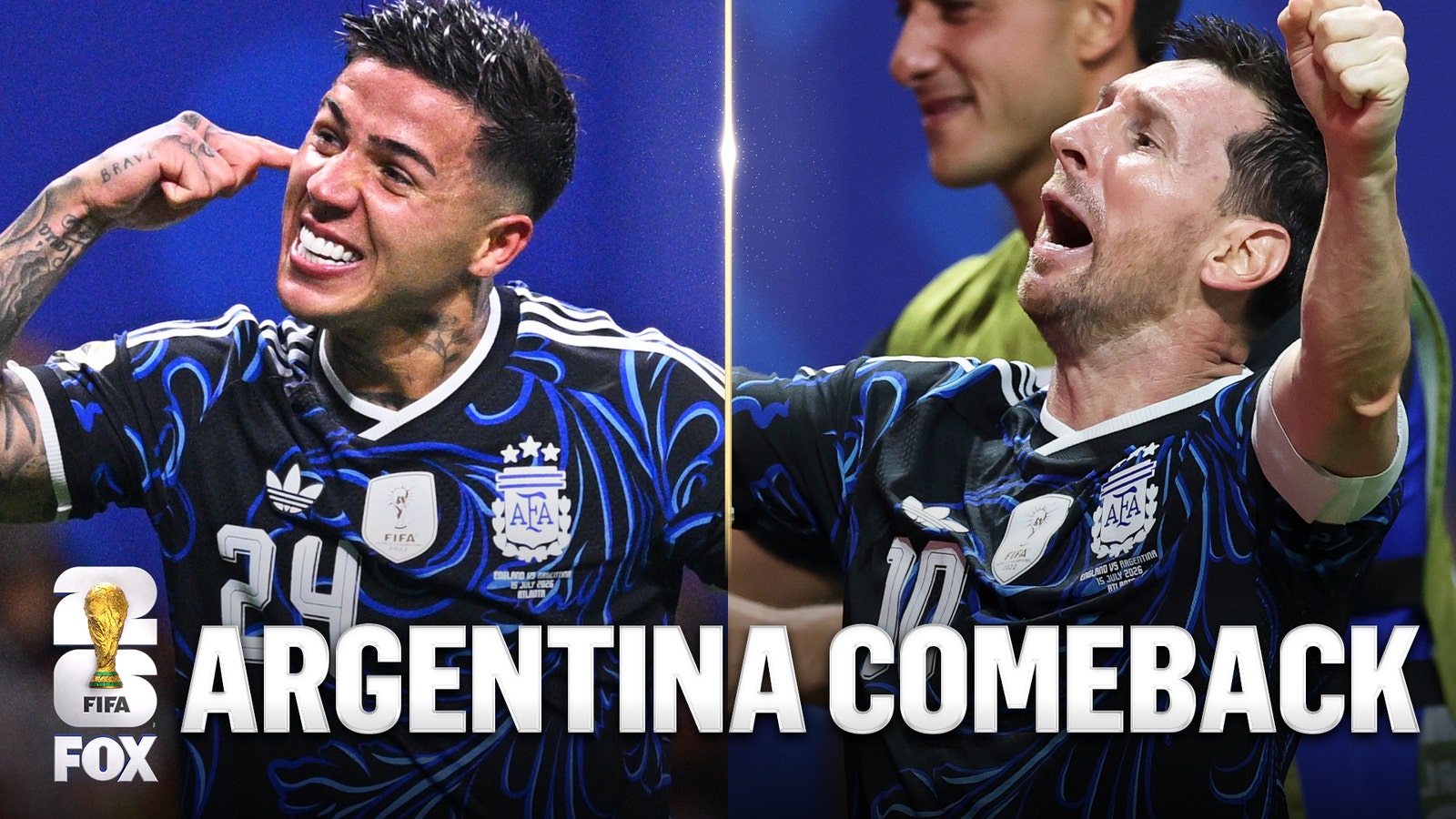
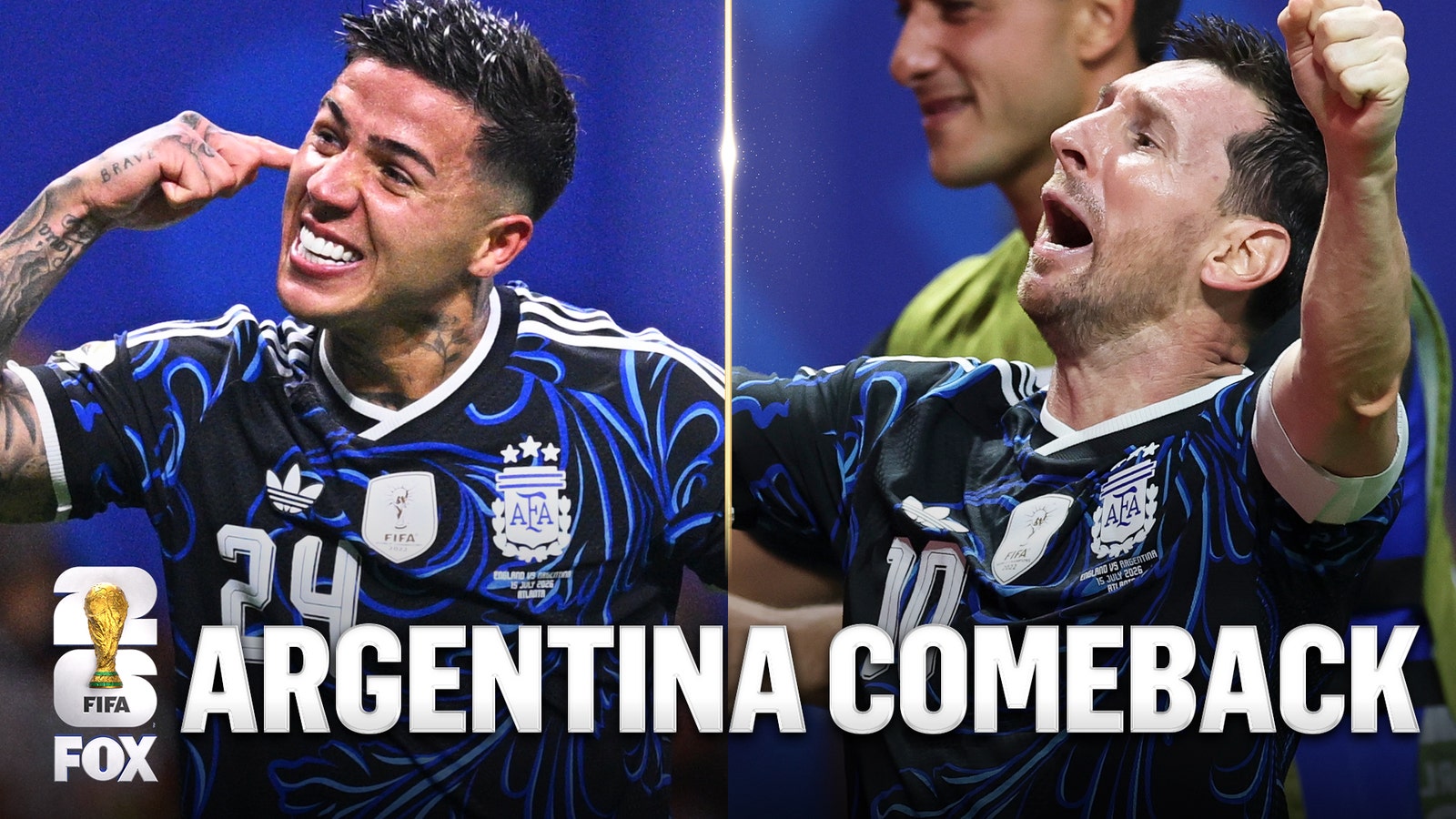
And Argentina showed England exactly what Spain should expect. The first 30 minutes in Atlanta were a street fight: eight fouls and zero shots on target by the first hydration break, bodies down everywhere, and rhythm nowhere to be found. Thomas Tuchel’s England took a 55th-minute lead through Anthony Gordon and then sat on it, inviting wave after wave until the dam broke. Enzo Fernández bent one in from distance. Lautaro Martínez headed the winner in stoppage time off a fantastic right-footed Messi cross.
Tuchel has been torched for his second half tactics, and deservedly so, but here’s the warning for Sunday: Argentina will try to drag Spain into that same alley.
That’s the whole final, really. Spain wants a game of order. Argentina wants a game of chaos. One team has conceded a single goal. The other refuses to die.
And in the middle of it all, a man and the baby he once bathed, meeting again with the world watching.
HISTORIC COMEBACK 🇦🇷 Argentina Scores Two Goals in Second Half, ADVANCING to FIFA World Cup™ Final