|
Only have a minute? Listen instead |
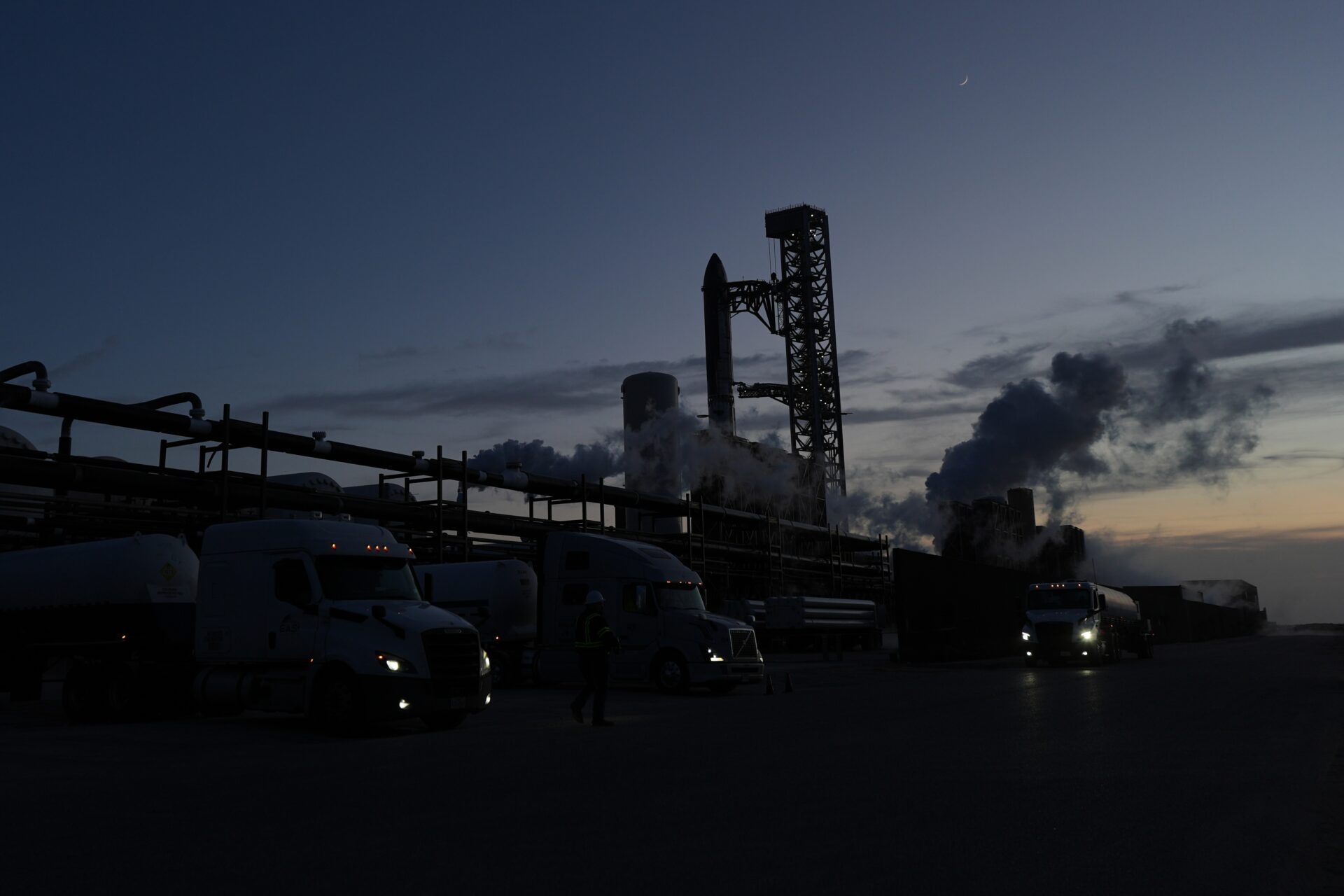
SpaceX is now targeting Thursday for Flight 13 of its newly redesigned Starship/Super Heavy from Boca Chica/Starbase.
The expected launch of Starship S40 and Super Heavy booster B20 was scrubbed at T-0 last Thursday after a portion of the booster’s 33 Raptor engines failed to ignite for liftoff, triggering an automatic abort of the planned suborbital flight. The new launch window opens at 5:45 p.m. and closes at 7:56 p.m. on Thursday.
Back up dates are Friday and July 29, with the same launch window.
Flight 13 will be the second test of the newest, orbital version (V3) of Starship and Super Heavy, the massive vehicles SpaceX has been developing at Boca Chica/Starbase for missions to the moon and flights between Earth destinations. One key to the program’s success is making both stages (stage-one Super Heavy and stage-two Starship) fully reusable.

SpaceX founder/CEO Elon Musk had long touted Starship as the vehicle that will get humans to the red planet (Boca Chica, Gateway to Mars) though Musk earlier this year indicated that’s no longer top priority.
“For those unaware, SpaceX has already shifted focus to building a self-growing city on the Moon, as we can potentially achieve that in less than 10 years, whereas Mars would take 20-plus years,” he posted on Feb. 8.
SpaceX was awarded a multi-billion dollar NASA contract to develop Starship as the Human Landing System (HLS) that would take U.S. astronauts to the moon for the first time since 1972. The mission Artemis III, part of NASA’s Artemis lunar program, was supposed to take place no later than mid-2027, having been pushed back repeatedly.
Starship development milestones have been late in arriving, however, according to NASA, which in late February announced a reconfiguration of the mission. The updated Artemis III (still set for mid-2027) will involve testing “systems and operational capabilities in low Earth orbit to prepare for an Artemis IV landing in 2028,” according to the space agency.
A key mission goal will be “rendezvous and docking with one or both commercial landers from SpaceX and Blue Origin,” NASA said.
For the mission, four crew members inside a Lockheed-Martin Orion spacecraft will be launched into orbit atop a NASA Space Launch System (SLS) rocket from Kennedy Space Center in Florida.
With Artemis IV, scheduled for early 2028, Orion will dock with either SpaceX’s or Blue Origin’s lander — whichever NASA deems most capable — and then the lander will carry the astronauts to the moon’s surface.
“Lander readiness will determine which provider (Blue Origin or SpaceX) will safely carry them to the surface and back to Orion in lunar orbit before crew return home aboard Orion — splashing down safely in the Pacific Ocean,” according to NASA’s mission description.
In advance of Starship Flight 13, SpaceX said it has made several modifications to Starship and Super Heavy following Flight 12 on May 22, when the booster lost engine power and failed to execute a planned controlled landing in the Gulf of Mexico, and Starship one of its six engines during the test flight.