|
Only have a minute? Listen instead |
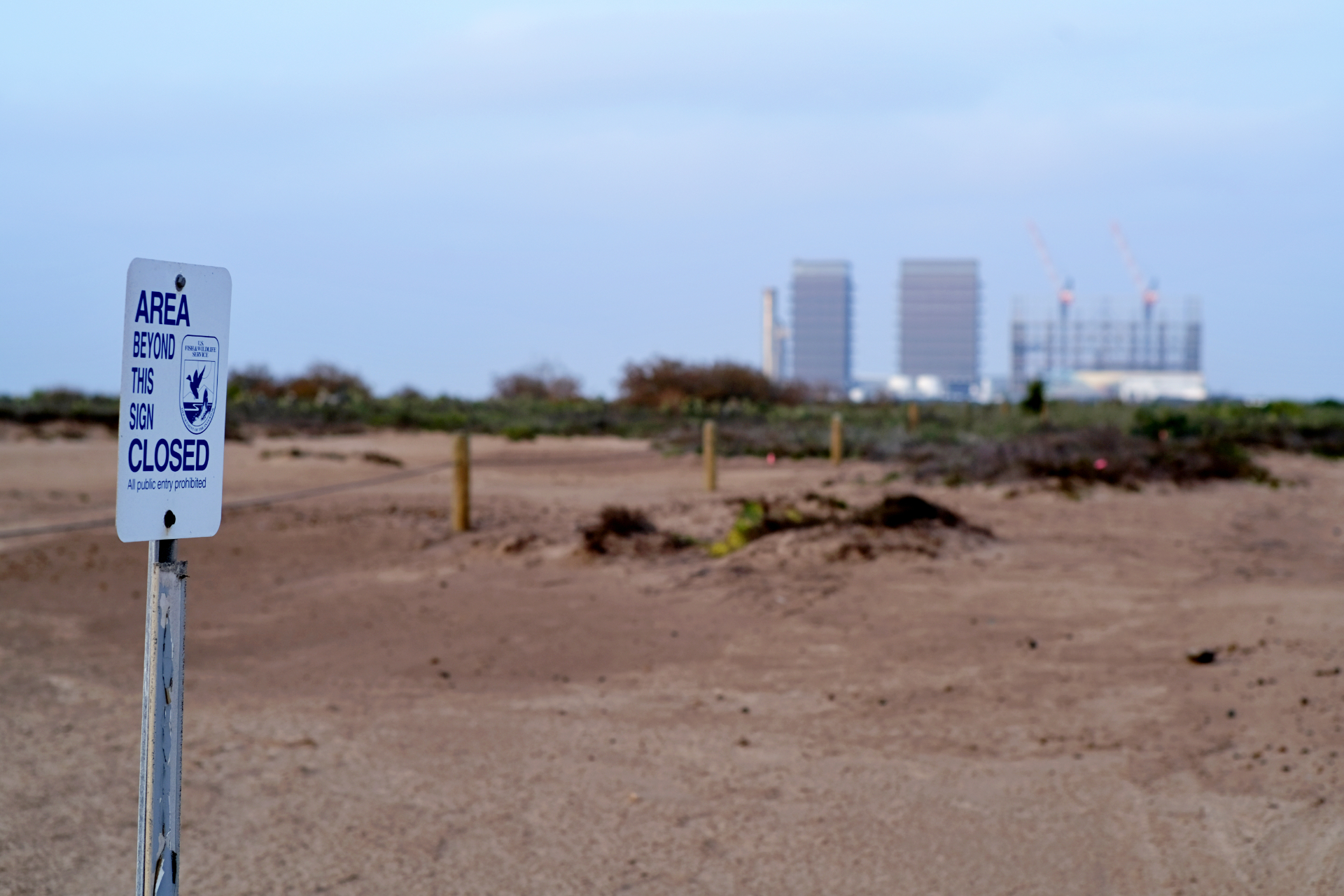
Conservation groups have asked a federal judge for an emergency injunction to stop the handover of 727 acres of public land in the Lower Rio Grande Valley National Wildlife Refuge to SpaceX, warning that the deal may be finalized before the courts have a chance to rule on its legality.
Requesting the injunction are the Center for Biological Diversity (CBD), Save RGV, the South Texas Environmental Justice Network, and the Carrizo/Comecrudo Nation of Texas Inc., plaintiffs in a lawsuit filed June 10 against U.S. Fish and Wildlife Service over the proposed deal. CBD attorneys are representing the plaintiffs in the case.
The June 20 motion is an attempt to halt the land exchange until the court resolves the underlying lawsuit, according to CBD, which said “without prompt action by the court, the refuge parcels could be permanently transferred to SpaceX within weeks, accelerating industrial expansion into one of the most ecologically important landscapes in South Texas.”

The plaintiffs sued the USFWS in response to the agency’s decision to allow swap, which transfers 727 acres of the refuge to SpaceX in exchange for 683 acres of private land next to another refuge, Laguna Atascosa National Wildlife Refuge.
Laiken Jordahl, CBD national public lands advocate, accused federal officials of “racing to fork over America’s public lands to one of wealthiest corporations on Earth before the courts can even weigh in.”
“This refuge is one of the last places left for the public to enjoy nature in the Rio Grande Valley,” he said. “Why should Texans be forced to surrender even more of their public lands to a trillion-dollar corporation? The court has to intervene now because once these refuge lands are transferred to SpaceX they’re gone forever.”
Without an injunction, the land swap could take place within weeks, “accelerating industrial expansion into one of the most ecologically important landscapes in South Texas,” CBD said.
The proposed deal first became public in March, though records obtained under the Freedom of Information Act reveal internal agency planning began as early as April 2025, according to CBD. In discussions with the USFWS regional director, the agency opted for the “most expedited schedule possible” for completing the deal, with a recommendation that additional staff be brought onboard to meet what was described in deliberations as the “optimum timeframe,” CBD said.
USFWS has rebuffed all requests by the plaintiffs to voluntarily pause the land swap since the filing of the June 10 lawsuit, according to CBD, which noted that SpaceX had intervened in the suit, joining the federal government in trying to get the case transferred to federal court in South Texas, “a move that plaintiffs fear would further delay the case,” CBD said.

LRGV-NWR was created in 1979 to protect rare wildlife such as ocelots and aplomado falcons, and migratory birds including piping plovers, red knots, green jays and Altamira orioles. The refuge encompasses some of the most viable remaining U.S. habitat for the endangered ocelot, as well as a sizable chunk of the Palmito Ranch Battlefield National Historic Landmark, where the last battle of the Civil War took place, CBD noted.
SpaceX broke ground at Boca Chica in 2014 for what it said then would be the world’s only commercial launch site, with plans for up to 12 launches a year using its Falcon rockets — much smaller and less powerful than the Starship/Super Heavy vehicles the company later pivoted to developing at Boca Chica.
The Federal Aviation Administration last year authorized a dramatic increase in the Starship and the Super Heavy booster launch cadence — up to 25 launches a year, plus 25 landings each for Starship and Super Heavy, representing a five-fold increase from that previously allowed.
“Some of these launches have resulted in catastrophic explosions that have propelled debris, including concrete and metal, more than six miles onto refuge lands,” CBD said. “Post-explosion surveys have revealed environmental damage to nearby lands on (LRGV-NWR).”
CBD cited a 2024 study’s results showing that “after one launch every single monitored shorebird nest near the launch site suffered egg damage or loss.”
“Instead of taking any enforcement actions or working with SpaceX to reduce or eliminate its harm to the refuge, (USFWS) is now citing the resulting degradation as justification for handing the public land to SpaceX,” the organization said.