|
Only have a minute? Listen instead |

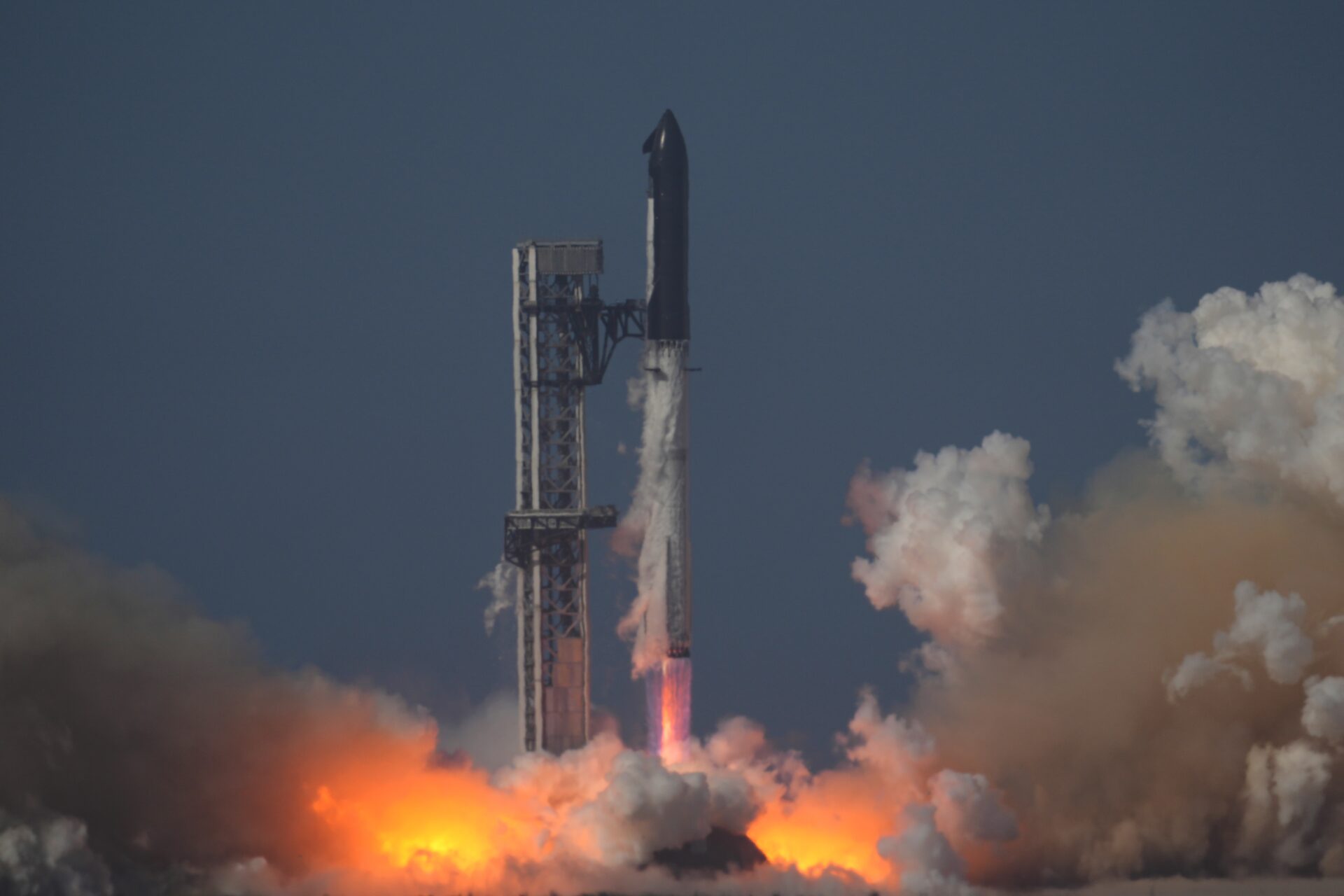
Starship S40 and Super Heavy booster B20 lifted off from SpaceX’s launch pad No. 2 at Boca Chica at 5:51 p.m. on Friday after previously scrubbing the launch twice — Thursday due to weather and on July 16 because some booster engines failed to light.
This is the 13th flight of Starship/Super Heavy and the second flight of the latest version (V3) of Starship, which has six engines, and the Super Heavy booster, fitted with 33 engines. Starship/Super Heavy V3 is significantly redesigned, and larger and more powerful than the previous version, V2. Fully stacked, the V3 vehicles rise to more than 400 feet and are nearly 30 feet in diameter.

The stage-one booster and stage-two Starship separated a few minutes after launch as planned, with Super Heavy making a controlled landing offshore six minutes after liftoff and Starship on a suborbital trajectory to reentry and soft splashdown in the Indian Ocean near Australia.
With Friday’s landing of Super Heavy in the Gulf of Mexico, SpaceX appears to have corrected the issues that caused the loss of booster B19 during Flight 12 on May 22. During that flight, Super Heavy lost some of its engines after separating from Starship and plummeted into the Gulf rather than touching down under power.