
|
Only have a minute? Listen instead |
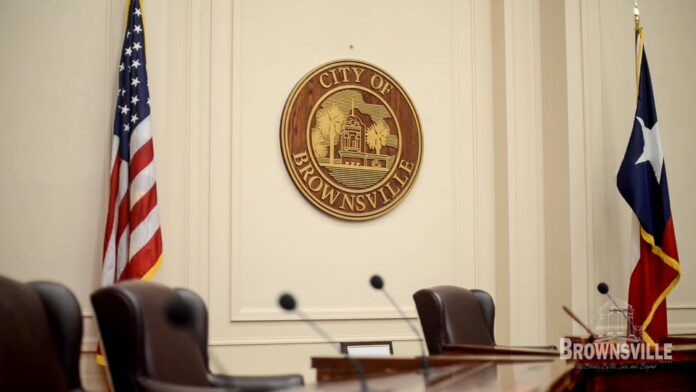
BROWNSVILLE — City commissioners here voted Tuesday to move forward with the process of establishing a moratorium on the new applications for rezoning or permits for data centers in the city.
Commissioners approved a resolution directing the city manager to initiate the process to adopt a temporary 90-day moratorium on high-intensity data processing facilities. It will also reactivate the Environmental and Conservation Task Force to advise the commission on data center policies and develop regulations.
The Texas Legislature last year changed the speed at which cities can establish moratoriums, City Attorney Will Treviño told commissioners. Previously, a moratorium could go into effect within days of cities posting a public notice for a hearing on the issue.
Under the new state law, the process will require three public hearings with 30 days between the first and second. City administrators proposed a schedule that includes a second public hearing on Oct. 6, a first reading of the moratorium ordinance on Oct. 13, and second reading and final vote of the ordinance on Nov. 17.
Under the proposed schedule, the data center moratorium would run from Nov. 18 to Feb. 16, 2027 with the option for commissioners to extend it by another 90 days. If approved, the extension would run until May 18, 2027.
State law does not allow moratoriums longer than 180 days, and the city could not enact another data center moratorium for two years. It must also include an appeal process.
The city must adopt new regulations at the end of the moratorium, Treviño said.
The task force will study data centers’ impact on electricity, water use, land, neighborhoods and economic development, among other issues. It will be made up of 12 members that include representatives from the the community, business sector, environmental advocacy, the Brownsville Public Utilities Board, the city government, natural resource management and someone familiar with data center operations.
Conversations on data centers in Brownsville began when a company asked for a permit for a data center in the old Southwest Key Casa Padre building that was formerly a Walmart. Following public outcry, the city commission floated the idea of a moratorium.
Public comments on the moratorium mostly were intertwined with reactions to the commission’s Saturday vote to approve SpaceX’s rushed request for disannexation of property that it’s purchasing near the Brownsville landfill. In exchange, the rocket company will give the city $220 million for water infrastructure projects, funding for critical upgrades that officials have said would be extremely difficult to otherwise come by.

During the regular public comment period, roughly a dozen business leaders and business owners praised the commission for approving the deal with SpaceX. By ensuring the city’s water supply is sustainable, they said, the decision will support economic growth, jobs and help the region continue to train and attract talent.
Esmeralda Villarreal, president and CEO of the Brownsville Chamber of Commerce, said that water resource management was one of the top issues that chamber members asked the organization’s leaders to speak with policymakers about during a planned trip to Washington, D.C.
“We cannot control drought, we cannot control every variable in the Rio Grande, but we can control how prepared we are,” Villarreal said. “Because we want businesses to invest for the long-term, we have to build infrastructure for the long-term.”
Brownsville resident Jason Medina thanked the commission for approving the agreement with SpaceX and securing the funds. He said that Brownsville’s rapid growth can be both exciting and frightening, and that growth demands investment in infrastructure.
“Brownsville has the world’s attention,” Medina said. “As a blue collar worker who has spent his career traveling the country, supporting infrastructure projects for cities on the rise, I clearly understand that MOU was of the utmost importance.”
The SpaceX agreement came up again when residents described their concerns over data centers during the public hearing on the moratorium.
“I truly cannot believe that the best use of my time in my one short life is to stand before you and state the obvious by telling you I don’t want a data center in my backyard,” Brownsville resident Leah Hollingshead told commissioners, adding the company posted a job listing for a senior council over data center development locally. “The citizens of Brownsville know that SpaceX wouldn’t have put Saturday’s MOU on the table if they wouldn’t get more than they gave.”
Jaqueline Morales, a Brownsville attorney, said that she drove to the public hearing straight from Austin after a Texas Senate hearing where experts testified on the water use of data centers.
“These Texas senators expressed the common sentiment from their own constituents that no one wants data centers in their district,” Morales said, adding the experts testified that new proposed data centers in the state require an average of 1,000 megawatts of power. “You must have a moratorium on data centers because you must learn the ins and outs of this invasive industry.”
In other business, commissioners voted to adopt the 2026-2027 Fiscal Year budget and tax rate. They will take effect Oct. 1.