
Urban Meyer laughed when he saw the words in front of him.
He was sitting in a meeting with Gene Smith, Ohio State’s athletic director at the time, reviewing the objectives for the Buckeyes’ head coaching job — one Meyer was about to accept.
And on a piece of paper, the statement “win every game” was written out.
Meyer couldn’t believe it. Ohio State would be his fourth college head coaching job, and he had already won two national championships at Florida. He doesn’t recall whether the directive made it into his contract, and it was part of a broader conversation about the program’s priorities. But he remembers this detail clearly: Never before in his coaching career had winning been spelled out so explicitly.
“I looked at [Smith] and kind of laughed,” Meyer told me recently. “And I said, ‘That’s pretty bold.’ I had the same type of job description, I thought, at Florida. But I never had it in front of me. I think Ohio State is one-of-one that does that.
“I sat back and thought, ‘Wow, this is actually on a piece of paper.’”
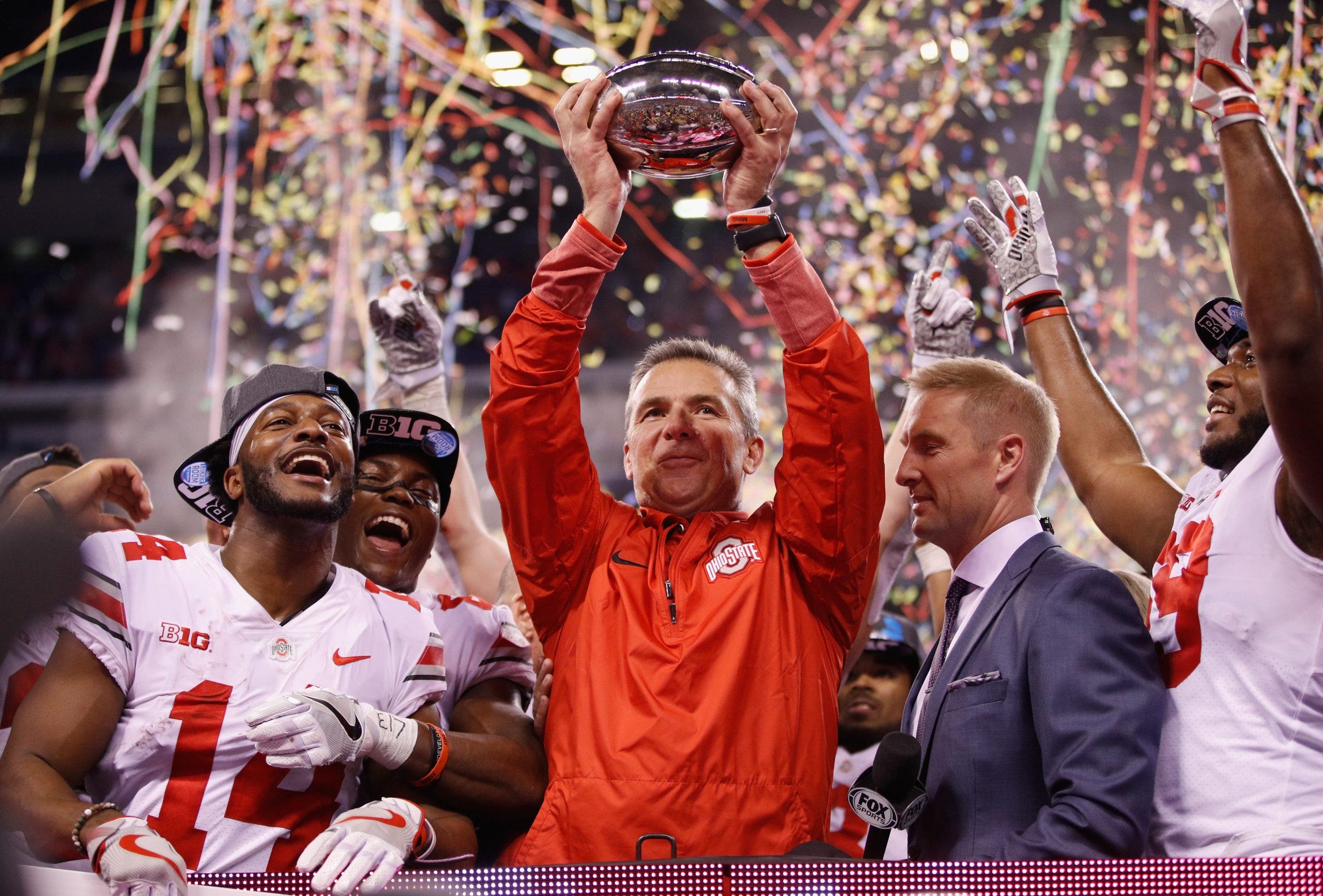
Urban Meyer went 12-0 in his first season at Ohio State. (Photo by Joe Robbins/Getty Images)
In this era of NIL, the transfer portal and the pressure to reach the College Football Playoff, winning every game is “almost impossible to do,” Meyer said. But “it’s certainly what you strive to do.”
The challenge is what happens when a team inevitably falls short. When a loss threatens to derail a season — or dims playoff hopes — how do coaches keep their locker rooms together? How do they prevent one defeat from turning into a downward spiral?
In 2015, a year after leading Ohio State to a national championship, Meyer’s Buckeyes lost to Michigan State, 17-14 in a rainstorm at home. It was devastating, and Meyer couldn’t sleep that night. Not because his team lost, but because he wondered, ‘How do I keep this team playing?’
He knew Ohio State’s hopes of making the then-four-team playoff were in jeopardy.
“How do I walk in that team meeting room on Sunday and give these guys hope?” Meyer explained this week on the “Triple Option” podcast. “The minute hope is gone, you’re gonna see some horrendous football. You’re gonna see s— happen, because kids will quit playing hard. It is what it is. That’s the reality.”

Throughout his career, Meyer’s strategy in those moments was to go into the meeting room on Sunday and lay out a tangible path to the postseason — something the players could rally around. He’d lean on his leadership group to set the tone and hold the rest of the team accountable.
That particular season, he was successful. Following the loss to the Spartans, Ohio State responded by rushing for nearly 400 yards in a win over Michigan the following week before beating Notre Dame in the Fiesta Bowl. The Buckeyes finished 12-1, a strong season by most accounts, but were left out of the playoff.
Texas was ranked No. 1 in the country entering last Saturday’s annual Red River Rivalry game against unranked Oklahoma. The Longhorns made too many mistakes and the Sooners pulled off a 27-24 upset.
This week, Texas coach Steve Sarkisian reminded his team that they’ve been in this position before. He pointed to the 2023 group, which entered the season with big aspirations of their own before losing to OU. That team “took that loss tough,” Sarkisian told reporters during his weekly news conference, but regrouped, won every game the rest of the way, including the Big 12 championship, and advanced to the CFP semifinals.
“And so it’s not the end of the season,” Sarkisian said. “We all want to win that game, and we all want to win every game. But yet, there’s more games to go. So how do we take the adversity, and how do we grow from it?
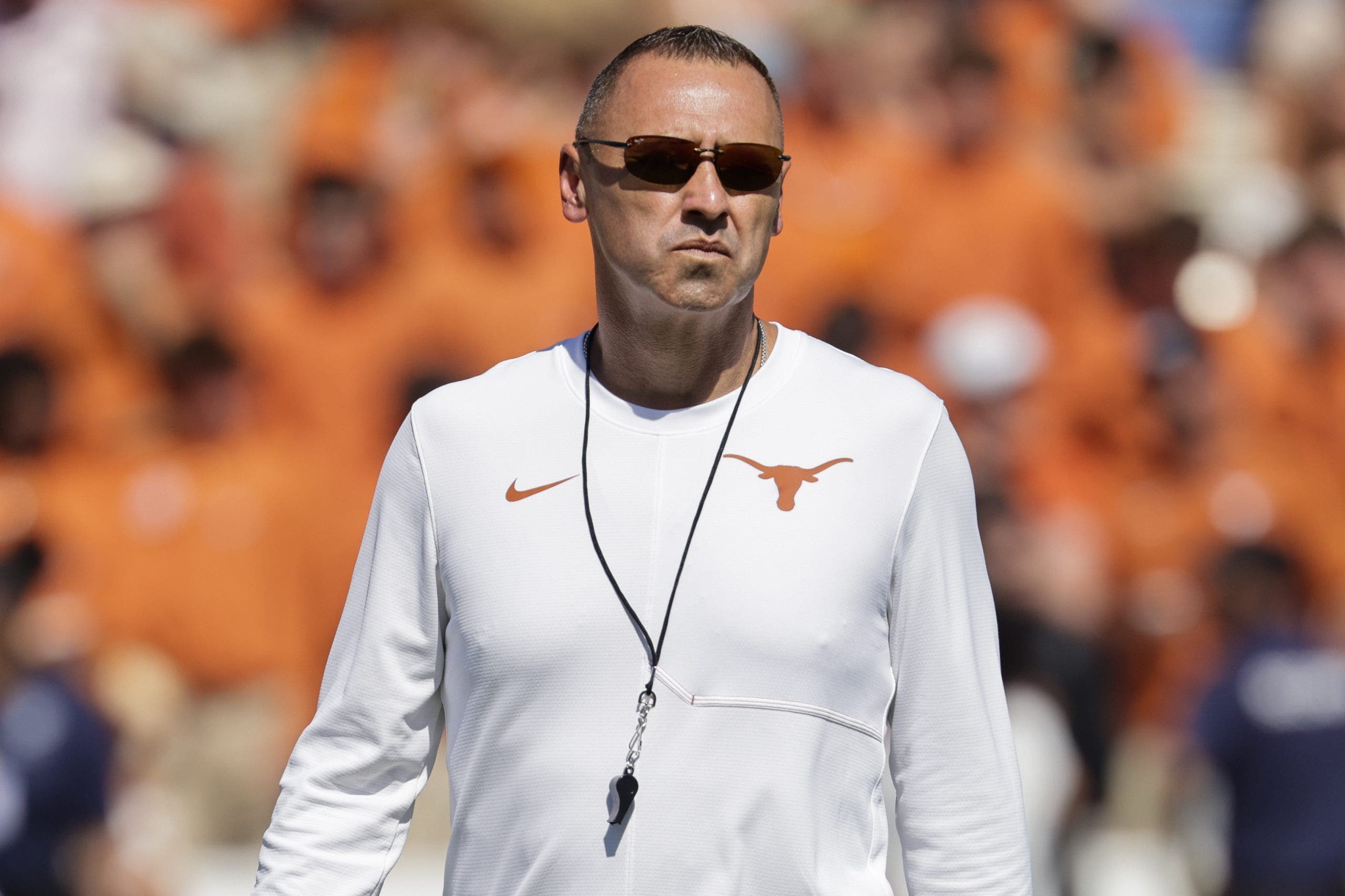
Steve Sarkisian has led Texas to a 4-1 record this season. (Photo by Gunnar Word/Getty Images)
Sarkisian challenged his players to shift their focus from the disappointment of the loss to what they could learn from it and how they could use it to fuel the rest of their season.
“I said to the team, not all storms come to disrupt your life. Some come to clear our path. And so how do we use this adversity, and what path did it clear for us?”
Former Boise State and Washington head coach Chris Petersen took a similar approach, always laying the groundwork during spring ball and fall camp. The goal was to prepare his teams for adversity before it arrived, so that whenever they lost a game, he wouldn’t have to work overtime to keep the locker room intact.
“We’ve already talked about all the adversity and the twists and turns that this season is going to take that we’re not expecting,” Petersen told me. “And the best teams can stay in the moment and not get ahead of themselves.
“There’s still so much football left to be played,” Petersen continued. “This is what the fans and the media do. ‘Oh, it’s over.’ It’s not. It’s completely the opposite message. … Winning is the greatest deodorant. It can mask a lot of things.”
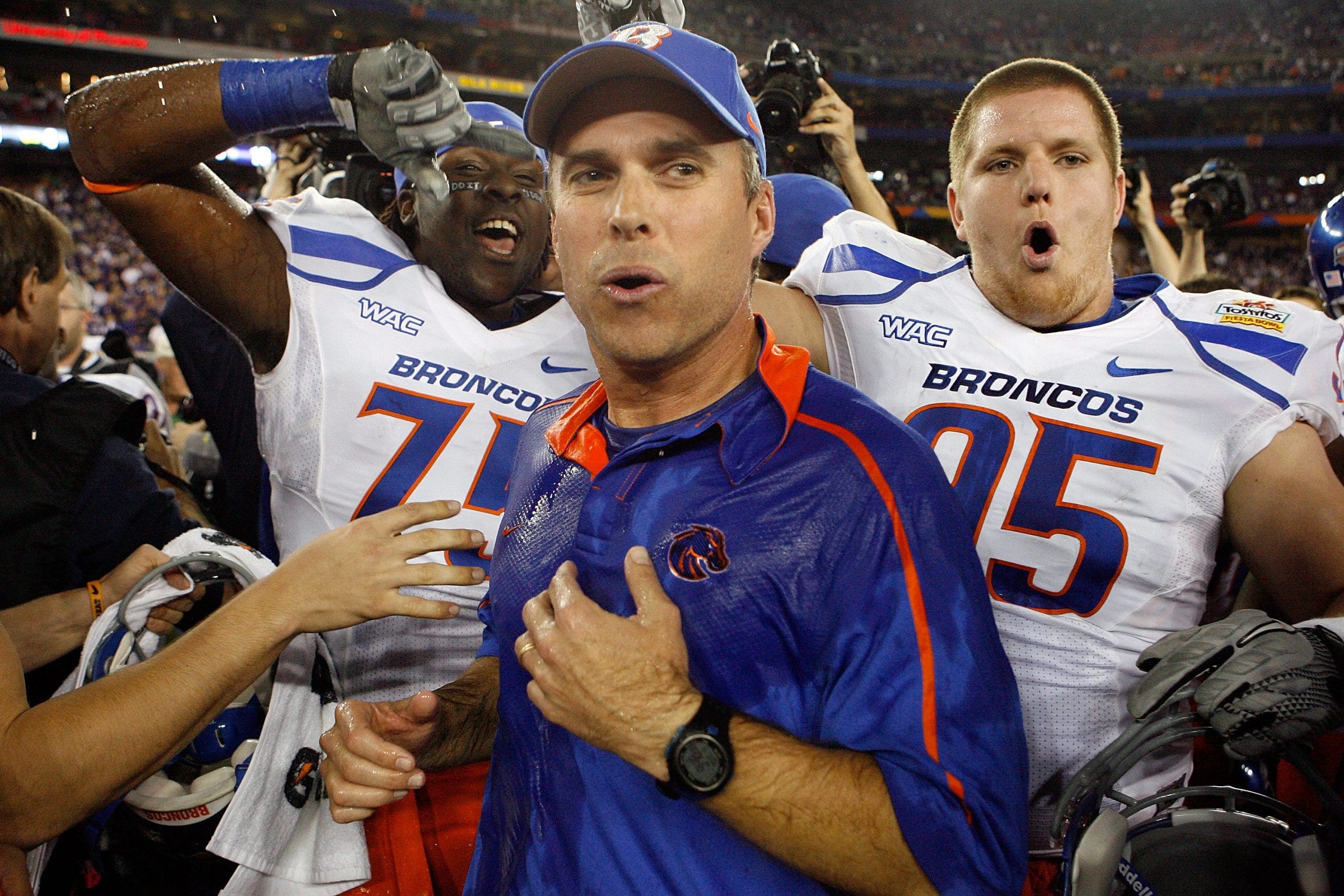
Chris Petersen led Boise State to a 13-0 record and a win in the Fietsa Bowl in his first season. (Photo by Christian Petersen/Getty Images)
It’s mid-October, and 17 teams in the Top 25 already have at least one loss. No. 2 Notre Dame and No. 8 BYU are both undefeated heading into Saturday’s matchup, meaning one will take its first loss, joining the larger group.
There’s plenty of chaos still to come, bringing more obstacles for teams to navigate. But also, more opportunities to fight their way back into the playoff picture.
“Failure itself, we need that to grow, to get better, to improve,” Petersen said. “If we’re winning all the time, either the competition is not right, or we’re not having enough resistance, and it’s eventually going to make us stagnate and complacency is going to set in, and it’s going to get us in the long run.”