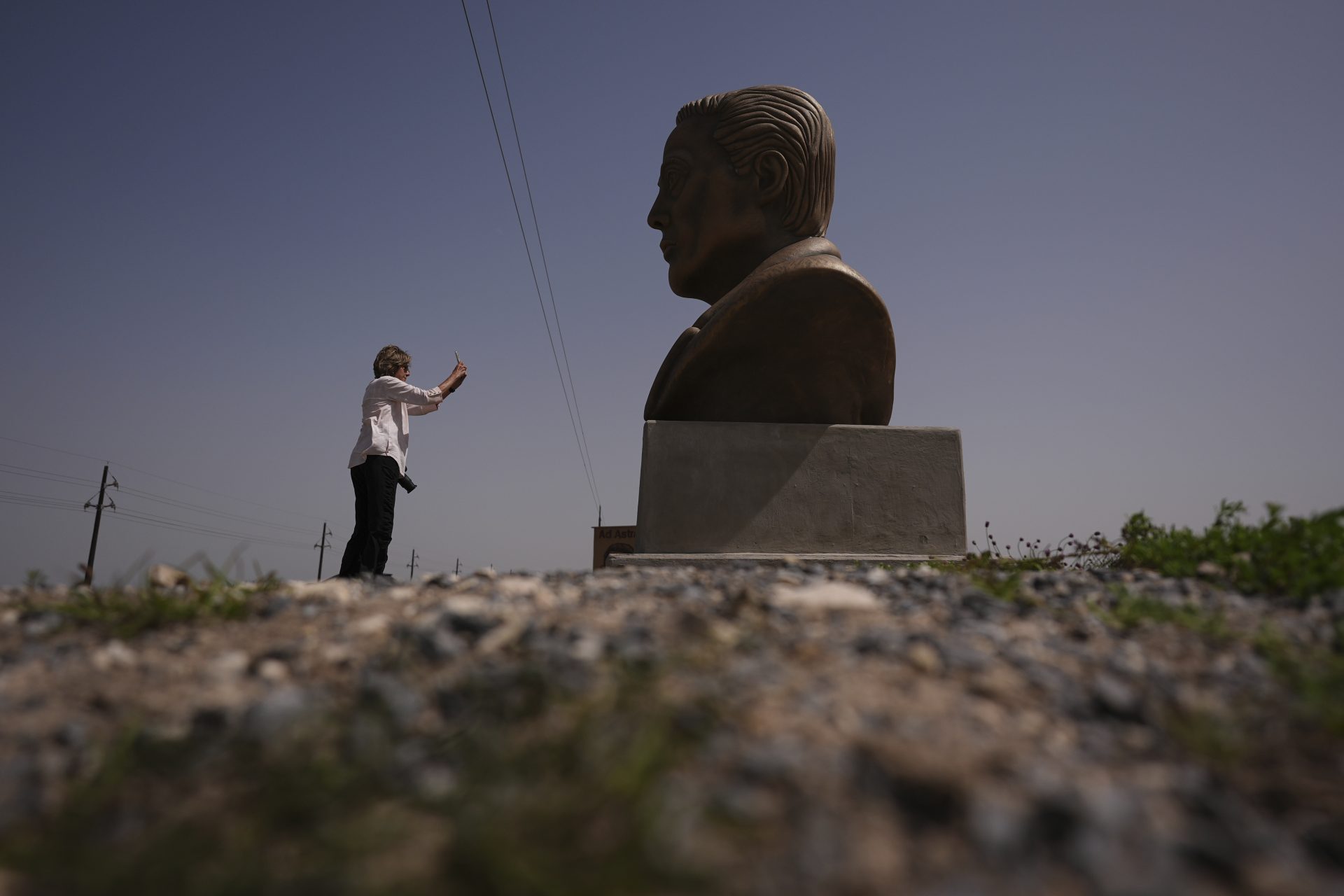

BROWNSVILLE — Elon Musk hadn’t yet flown a single person to space when he approached local leaders here with a plan 15 years ago: He wanted to save humanity by colonizing Mars, and to get there he proposed building a giant rocket facility in this impoverished town.
Gilberto Salinas, a local economic development official, said he laughed it off initially: “This is just crazy, right?”
Salinas flew to Hawthorne, California, to see SpaceX’s early rocket factory and to “kick the tires” on the company, as he put it, because it was then still essentially a startup.
“They were, in fact, building rockets,” Salinas said. “But they were a bunch of kids that were in their late 20s, early 30s. To me they looked like skateboarders.”
Still, Salinas wondered: What if this could be the project to revive his downtrodden hometown on the Mexican border? “We could potentially become the next space city,” Salinas remembers thinking. “Fast forward to today and we are that.”
SpaceX has dramatically transformed the Brownsville region in the last 15 years — for better or worse, depending on who you ask. Here, the company is building the world’s largest and most powerful rocket in a newly formed company town called Starbase, just east of Brownsville on Boca Chica Beach.
Since SpaceX arrived in 2014, the region has added about 25,000 jobs. The company and local officials boast that it has injected $13 billion into the South Texas economy in 2023 and 2024. And Brownsville, which not long ago was the poorest community in the U.S., now has new, upscale restaurants and coffee shops downtown. An estimated 20,000 spaceflight tourists flock to town for every launch of the company’s 40-story prototype rocket, dubbed Starship.
Still, on a regular basis, protesters take to the streets with signs labeled “¡Fuera SpaceX!” — “SpaceX leave!” in Spanish.
That’s because residents say their homes shake during launches, and some allege in class-action litigation that their foundations have been damaged by sonic booms. The launch site, tucked between wildlife sanctuaries, has also polluted wetlands, according to regulators, and the spaceport’s impact on migratory birds relying on the habitat is not fully understood.
As Musk and SpaceX get ready to bring rocket launches to Louisiana’s Vermilion Parish with a planned $100 billion spaceport, the warp-speed transformation of Brownsville may offer a view of what’s to come.

A business boom
In Brownsville, population 185,000, downtown murals funded by the Musk Foundation depict Starship barreling toward the moon and Mars. At bars in town, beer from Starbase Brewing, an Austin-based brewery that aims to be the first to brew beer on the red planet, is served in pint glasses that read “Beer today, Mars tomorrow.” The local boat tour companies on South Padre Island, which traditionally ferried tourists to spot dolphins, have added tours focused on watching SpaceX rockets launch.
Among local leaders, there’s an optimism about Brownsville’s future that hasn’t been felt in years.
“When I go talk to the kids at schools, they tell me they want to work at SpaceX, they want to be astronauts, or they want to be engineers. And they want to work here,” said Eddie Treviño, the Cameron County Judge, a role comparable to that of a Louisiana parish president.
Once the nation’s leading cotton exporter, Brownsville was an agricultural community in the first half of the 20th century known for ranching and a shrimp fleet largely manned by Cajuns.
Then, in the 1980s, oil prices tumbled and led to a collapse in the value of the Mexican peso. Because Brownsville’s economy was so intertwined with Matamoros, Mexico, just across the border, it took a hit. Unemployment surged.
For decades, Brownsville was in dire need of an economic boost.
After those early meetings between Musk and Salinas in 2011, the local and state government put together a $50 million incentive package to bring SpaceX in, according to Salinas, now the president and CEO of the Greater Brownsville EDC.
That package was much smaller than the $27.5 billion in incentives that Louisiana just offered the company. “We got SpaceX here for pretty cheap back then,” Salinas said.
Brownsville officials and residents said the company’s presence has paved the way for big-ticket industrial projects bringing jobs and money to an area that was, in Salinas’ words, a “sleepy border town.” SpaceX says it has created more than 4,300 well-paid jobs, with plans to expand.
New business has flocked to surrounding Cameron County, too, which local officials attribute to SpaceX’s presence. A liquefied natural gas terminal is slated to open at the Port of Brownsville. A data center broke ground in nearby Harlingen. And the first new oil refinery to open in the U.S. in nearly 50 years is planned for the county.

Vice President JD Vance was here last month for a groundbreaking ceremony for a company that will build AI-powered battleships and promises to bring 10,000 jobs to the region.
“Twenty years ago, if we could get a development or a project of $30 million, that was just unbelievable. Now all of our projects are in the billions,” Treviño said. “We’re spoiled. And it’s led to a lot of other issues. Our infrastructure needs to catch up.”
As the region has industrialized, residents see their home values increasing and feel the uptick in economic activity. “There’s just a certain vibe in town now that did not exist before,” Salinas said.
Still, Brownsville remains largely poor. The city no longer has the highest poverty rate in the U.S., as it did in 2013, according to Census data. But roughly a quarter of people in the Brownsville region still live below the poverty line, more than double the national average of about 1 in 10. Down the street from Brownsville’s new French restaurant, many buildings remain boarded up.
“It’s bringing money into the place,” said Joseph Mendez, 42, who cooks at The Library, a Brownsville bar. “Me, personally, I’ve seen a lot of people come in from out of town. There’s a lot of jobs, a lot of good stuff.”
SpaceX is eyeing big expansion there, too, well beyond what local officials originally bargained for. The Federal Aviation Administration this week posted a notice that it will look into the environmental impact of SpaceX launching Starship, a rocket nearly as tall as the Louisiana State Capitol building, up to 456 times a year from its Texas launch site. That would mean up to 912 landings, since both stages of the rocket would touch down. Every launch will feature three explosive, window-rattling blasts.
So far, the company has launched that rocket, which is still a prototype, on just 14 test launches. In Louisiana, Musk has said he hopes to launch it 30 times a day, or more than 10,000 times a year.

Growing pains
From the porch of his ranch home, 15 miles from SpaceX’s launchpad, Rene Medrano can feel the sonic booms.
“When the rocket takes off from over there,” he said, gesturing toward Boca Chica Beach, “we feel it.”
Medrano, 66, and his wife, Ida, 65, have lived here for 40 years. They keep chickens and goats in their backyard. They’re in the country, the kind of place you’d choose to build a life if you valued quiet and nights with dark skies.
“It’s not quiet anymore,” said Rene Medrano, taking a sip of his beer. “You would come out here and you’d be silent and you could see the stars. Now you see glows of light from all the construction.”
They said they’ve had items fall off their shelves when the rockets launch. Their dog, Miller, “turns herself into a little ball” and hides under a chair trembling, Ida Medrano said. Traffic snakes through their small community. The road to Boca Chica Beach, previously used only by beachgoers, now shuttles and carries the Starship rocket to the launchpad.
Locals now have less access to Boca Chica Beach, a place that Brownsville residents value.
“It was known as the ‘poor man’s beach,’” Medrano said. “Families would go. They would barbecue; they would fish; they would enjoy the day.”

Salinas brushed off the concerns about beach access. “It was a very dirty beach,” Salinas said. “I never knew people cared so much about the beach until we started working on this project. Suddenly now, they’re very worried about it.”
Now, the city of Starbase decides if the beach is open or closed, thanks to a Texas law passed last year. Treviño, the county judge, said that he opposed the law — he previously had the authority to close the road and he would occasionally veto SpaceX’s requests to do so.
Treviño said he took heat from his constituents for allowing SpaceX to incorporate as its own municipality.
Starbase, Texas, became a city unto itself last year, after 212 residents there — mostly SpaceX workers — voted to do so. It is largely closed off to anyone who is not a SpaceX employee. The city’s mayor is a SpaceX vice president, Bobby Peden, who ran for his position unopposed and declined an interview request for this story.
“I was blamed for giving away Boca Chica Beach,” Treviño said. “But people have to understand that I don’t have the authority to say, well, you know what? I don’t want your business. … If you meet your requirements and ask for an election, I’m duty-bound.”
Treviño lost his bid for reelection earlier this year and is serving out the end of his term.

Still, he said, SpaceX has been a good partner, for the most part.
“All of our dealings with SpaceX have been more positive than negative,” he said. “I understand the concern from the environmental standpoint. We probably won’t know until down the road whether or not this was worse than we anticipated or whether all the precautions are working.”
Water ‘so clean you could drink it’
Two hours after SpaceX launched its 14th Starship test flight in late September, shorebirds — black-necked stilts and sandpipers — waded in water that had flowed off the launchpad. At liftoff, a “deluge” system blasts hundreds of thousands of gallons of water beneath the rocket, soaking up some of the blast’s heat and noise.
Much of that water instantly turns to steam. Some sprays into the surrounding area. It may contain heavy metals, like mercury, according to environmentalists and regulators.
“SpaceX says it’s so clean you could drink it,” said Justin LeClaire, an avian conservation biologist. LeClaire doubts that. Federal and state regulators cited the company in 2024 for discharging that water into surrounding wetlands without a permit.
But the site remains a birdwatcher’s paradise. On a single winter day on Boca Chica Beach, in the shadow of the launch towers, LeClaire counted 1,000 reddish egrets, a record-high number for the rare North American bird. He and his group, the Coastal Bend Bays & Estuaries Program, have documented SpaceX’s ecological impact.
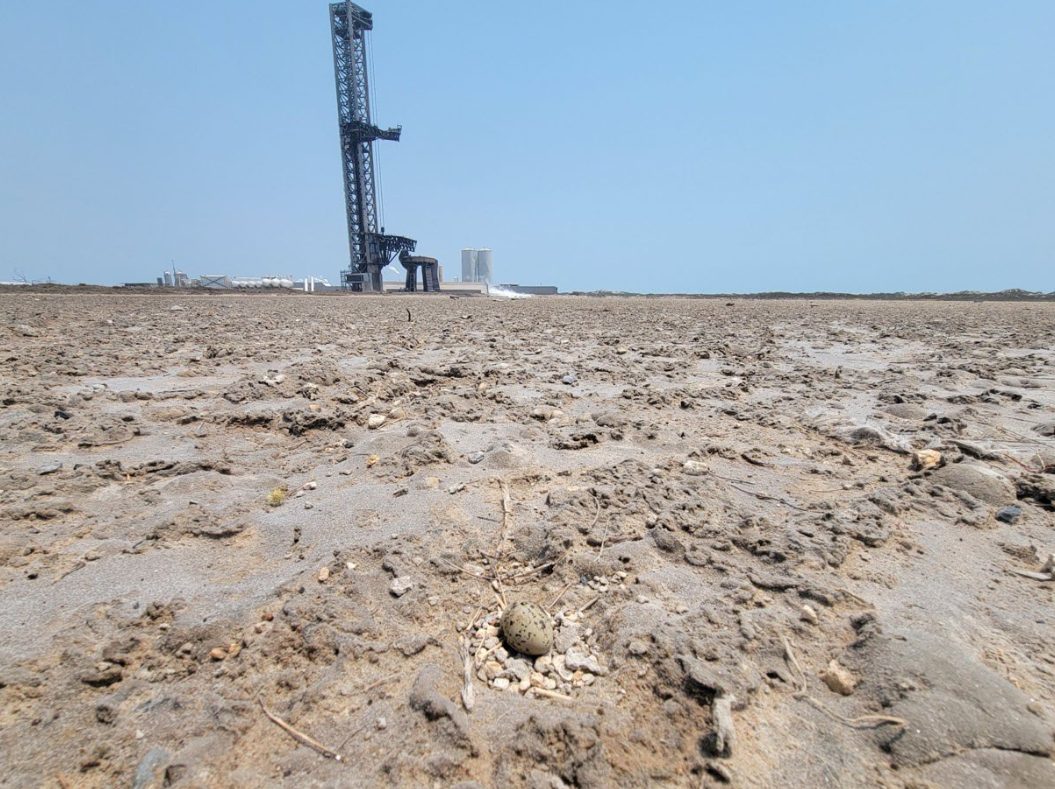
Paradoxically, the launchpad lured in shorebirds at first, LeClaire said. When SpaceX blew up its launchpad in 2023, it sprayed hunks of concrete and smaller pebbles over a sandy stretch near the pad. Plovers and terns like a beach with small rocks, according to LeClaire; they moved in and nested there. But the next launches shot debris at the nests, decimating many of them.
It’s also not entirely clear what kinds of impacts the launches have on birds’ bodies. Gwynne Shotwell, SpaceX’s president, said during a speech announcing the company’s Louisiana spaceport that birds return to their habitat after each launch. Some clearly do. But no one has yet fully taken stock of the impact of a sonic boom on, for instance, a snowy plover. The fast-flying, hollow-boned creature weighs as much as a small lemon and its populations are declining.
As the frequency of launches increases to a pace that humanity has not previously attempted, the environmental impacts will only increase. Rocket launches aside, LeClaire said, the sheer scale of the development at Starbase, in a crucial migratory bird habitat, hasn’t done the birds and other wildlife any favors.
“We’re only looking at the impacts of launch every few months,” LeClaire said. “We don’t know how it will be if it’s every day, or multiple times a day.”
That’s exactly what’s planned now, in both Texas and Louisiana. To the richest man in the world and his followers, cracking a few bird eggs may be a small price to pay to achieve their interplanetary ambitions. And if his plans come to fruition, it appears that Musk thinks that SpaceX will ultimately save the birds — and all life on Earth.

“Extremely severe extinction events happen every 100M years or so and just switching to sustainable energy will not be enough to stop them,” Musk posted recently on X, the social media platform he owns. “Space satellites to control temperature and massive geo-engineering will be needed or it will be game over.”
The idea: to blot out some small percentage of the sun’s rays with a swarm of what Musk has described as “sentient satellites” to scale back global warming.
While Musk thinks his rockets can save the planet, Bekah Hinojosa, a Brownsville resident and a founder of the South Texas Environmental Justice Network, thinks the city’s ambitions would be better directed at problems closer to home.
“We do need jobs,” Hinojosa said. “But we need jobs that don’t shake and crack people’s homes.”
© 2026 The Advocate, Baton Rouge, La.. Visit www.theadvocate.com. Distributed by Tribune Content Agency, LLC.