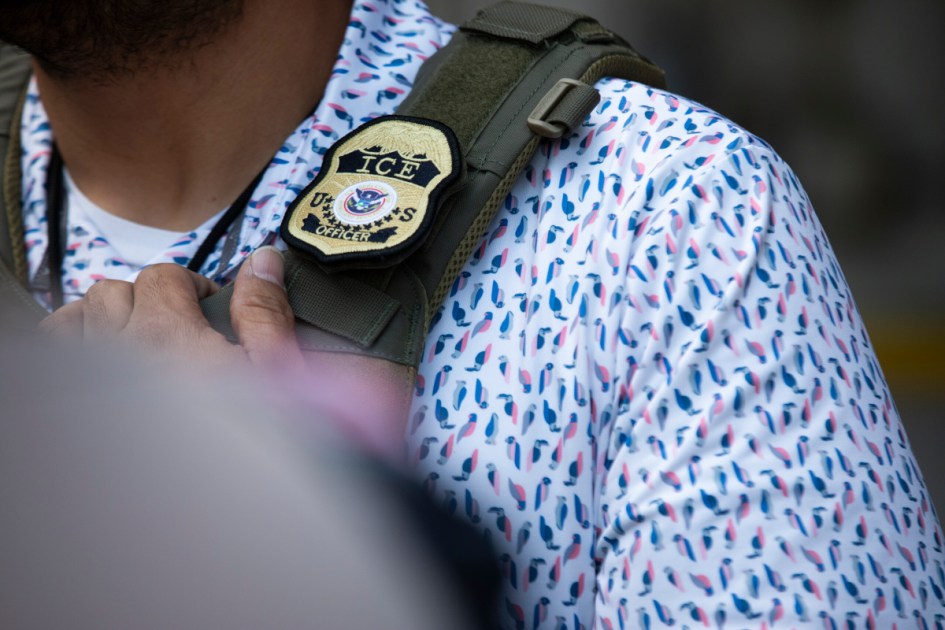

Gov. Greg Abbott’s office has threatened to cut state funding to three of Texas’ largest cities if they fail to change policies that the governor says limit police cooperation with federal immigration authorities.
Around $200 million in public safety funding is at risk for Houston, Dallas and Austin, with Houston facing the biggest potential loss of state funding.
On Monday, Abbott’s office told the state’s largest city that the state will withdraw around $110 million in public safety grants, if it does not repeal an ordinance limiting coordination between police and Immigrations and Customs Enforcement agents.
Abbott’s office followed that on Thursday with similar letters to Austin — warning the city that around $2.5 million in similar funding could be at risk — and Dallas, which stands to lose more than $32 million in grants, as well as more than $55 million in World Cup public safety funding.
Some cities have also been under legal scrutiny from Attorney General Ken Paxton’s office, which said their policies violate Senate Bill 4, a state law that bans local governments from adopting measures that “materially limit” immigration enforcement.
“Cities in Texas are expected to make the streets safer, not more deadly,” Andrew Mahaleris, Abbott’s spokesperson, said in a statement.
Mahaleris didn’t immediately respond to the Tribune’s questions about whether the governor’s office has sent similar letters to any other local governments.
Austin Mayor Kirk Watson pushed back against Abbott’s threat in a public statement, saying that the city’s policy is consistent with SB 4 and only provides clarity for officers when they interact with immigration officers.
“The City of Austin has made great progress on public safety — but our APD officers do not have the capacity — and should not be asked — to do the jobs of other entities,” Watson said. “There is great irony that the state would try to punish the City for providing services that keep Austinites safe by threatening grants that keep Austin safe.”
The Austin Current reported that Attorney General Ken Paxton opened an investigation into the Austin Police Department’s immigration policy, which it revised after the January detention and alleged deportation of a Honduran woman and her 5-year-old child sparked community backlash.
Meanwhile, it’s not clear whether Dallas is also being investigated by Paxton’s office, which didn’t immediately respond to a request for comment.
In response to Abbott’s letter, Dallas spokesperson Rick Ericson said: “We remain committed to complying with all applicable state and federal laws while continuing to prioritize public safety for the residents of Dallas, and ensuring our officers have the resources and support necessary to effectively serve the community.”
Meanwhile, Houston Mayor John Whitmire — who voted for the ordinance targeted by Abbott — called the governor’s threat a “crisis situation” and immediately pushed for a special city council meeting to reconsider the measure. But while Whitmire received an extended deadline from the governor’s office, Houston was also slapped with a lawsuit from Attorney General Ken Paxton’s office Thursday over the same issue.
Whitmire’s office didn’t immediately respond to a comment request about Paxton’s lawsuit.
Councilmember Alejandra Salinas, who spearheaded Houston’s ordinance, called on city leaders to “vigorously defend” the ordinance and residents’ constitutional rights. Prior to Paxton’s lawsuit, she had already been calling on the city to challenge Abbott’s threat in court.
“It’s no longer a question about whether the City should go to court. We’re already there,” Salinas said. “The Mayor and City Council must vigorously defend the law we voted for and that the City Attorney deemed legal. I stand ready to work with my colleagues to defend our laws and protect Houstonians’ constitutional rights.”
Source link