|
Only have a minute? Listen instead |

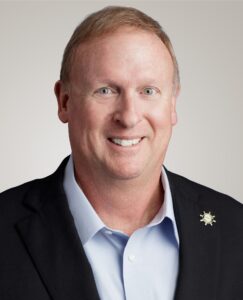
Brownsville Navigation District Secretary John Reed highlighted a long list of projects underway or planned at the Port of Brownsville during the State of the Port luncheon on June 11.
Reed has served on the BND Board of Commissioners since 2008, including two stints as chairman.
“In all that time, I can tell you with complete confidence that the best days of the port are still ahead of us,” he said. “The port is in the middle of one of the most exciting growth periods in its history.”
Reed asserted that the region is “transforming into a key energy and defense hub for the nation,” citing the America First Refining (AFR) project, announced by Donald Trump on March 10, and NextDecade’s Rio Grande Liquefied Natural Gas (LNG) terminal.
He described AFR as a “landmark development” for the port and the nation’s “energy landscape,” though the refinery project is still in the process of securing capital for construction, according to AFR founder and CEO John Calce.
The $36 billion Rio Grande LNG project is “well underway,” however, with five of eight processing trains under construction on nearly 1,000 acres of leased land on the Brownsville Ship Channel.
“The facility is on track to begin exporting LNG in 2027,” Reed said. “When complete, it will deliver enough energy to heat and cool the equivalent of more than 37 million U.S. households annually.”
Europe and Asia are the primary markets for the LNG the facility will produce from natural gas piped in from the Permian Basin and Eagle Ford.
Reed noted that over 73% of the 5,000-plus skilled workers building Rio Grande LNG are local residents.
Also in development at the port are defense-related projects representing a combined capital investment of about $14.5 billion, he said, with the potential to generate at least 20,000 jobs for the region.
“Perhaps the most transformative among them is Saronic (Technologies),” Reed said. “This project has the potential to position the (port) as a national center for autonomous maritime technology in defense manufacturing.”
The company’s specialty is advanced autonomous surface vessels designed “to enhance national security and strengthen America’s maritime capabilities,” he said. Austin-based Saronic is considering Brownsville for the site of its proposed $3.2 billion “Port Alpha” shipyard for autonomous vessels, though Solano County, California, is also reportedly a contender.

The Cameron County Commissioners Court on Tuesday voted (with commissioners David Garza and Gus Ruiz absent) to approve a 95%, 19-year tax abatement as an incentive to help convince Saronic to build the facility here.
Reed said the port is also witnessing “major momentum in industrial diversification beyond energy and defense,” citing Forza Steel USA, which has invested more than $100 million in a 650,000-square-foot facility along S.H. 48, bringing more than 100 jobs to the port.
Karpower Valley Inc., a Turkey-based manufacturer of floating power plants and data centers occupying the former site of Keppel AmFELS/Seatrium at the port, represents yet another recently arrived industrial player at the port, he said.
“Their presence brings a new dimension of innovation, flexibility and energy infrastructure capability to our port, and reinforces our position as a hub for the next-generation industrial development,” Reed said.
SpaceX, meanwhile, “continues to be a powerful economic catalyst,” putting the region on the map in terms of aerospace, advanced manufacturing and high-tech investment, he said.

“Individually, each of these investments command attention,” Reed said. “Together, they represent nothing short of a transformation. From the space, energy, defense, manufacturing, shipbuilding industries, this port is attracting capital on a scale that is reshaping the economic landscape of South Texas.”
BND is committed to balancing industrial development with environmental stewardship, he said, pointing to key initiatives such as restoration of a 10,000-acre coastal ecosystem and wetlands complex, plus protection of the Las Lomas Preserve, which safeguards roughly 2,000 acres of ecological habitat inside the port.
“We have also incorporated perpetual conservation easements into major projects, including 1,500 acres for Rio Grande LNG and 43 acres for Texas LNG, ensuring that mitigation and conservation are permanently embedded into our industrial footprint,” Reed said.
“In addition, we’re actively working to identify and preserve additional land that can serve as strategic buffer zones between industrial and residential development. To date, (BND) has acquired more than 500 acres for this purpose.”