|
Only have a minute? Listen instead |
The U.S. Fish and Wildlife Service is being sued by a local Native American tribe and some conservation groups to prevent the exchange of more than 700 acres of federally protected land in Cameron County.
According to the lawsuit, which was obtained by MyRGV.com, the Carrizo/Comecrudo Nation of Texas Inc., the Center for Biological Diversity, Save RGV, and South Texas Environmental Justice Network are suing to stop a land trade between the U.S. Fish and Wildlife Service and SpaceX.
The land trade would give SpaceX 715 acres of land from the Lower Rio Grande Valley National Wildlife Refuge in exchange for 683 acres of private land.
The lawsuit named the U.S. Fish and Wildlife Service and its director, Brian Nesvik, as defendants.
The exchange would give the agency land to be added to a separate refuge while allowing SpaceX to expand its operations in Cameron County, according to the complaint.
“Plaintiffs seek a declaratory judgement that the Service violated the National Wildlife Refuge System Improvement Act, the National Historic Preservation Act, the National Environmental Policy Act, and the Administrative Procedure Act in approving the Exchange; and injunctive relief to prohibit the execution of the Exchange unless and until the Service fully complies with the law,” the lawsuit stated.
The complaint alleges the exchange violates the National Wildlife Refuge System Improvement Act of 1997, the law created to protect habitats for future prosperity. It further claims that the exchange will result in the refuge being permanently reduced and degraded.
A portion of the refuge is shared with the Palmito Ranch Battlefield National Historic Landmark, the site of the final battle of the Civil War. The site was listed in the National Register of Historic Places in 1993 and designated as a National Historic Landmark in 1997.

The lawsuit also claims that the exchange would violate the National Historic Preservation Act because the exchange would result in the loss of historic property without a “comparable historic property” being gained.
The lawsuit goes on to claim that the SpaceX facility directly contradicts the goals and priorities of the Lower Rio Grande Valley National Wildlife Refuge.
“In addition to the bright lights, loud noise, and vehicle traffic caused by SpaceX’s operations, the rockets occasionally explode during testing and launches, sending debris and shrapnel into surrounding lands, including the Refuge and its wildlife habitat,” the lawsuit stated.
“Rather than exercising its enforcement authority to protect the Refuge from SpaceX’s activities and to require mitigation to address the harm SpaceX has caused, the Service seeks to give SpaceX over 700 acres within the Refuge, which will allow SpaceX to further its encroachment into the Refuge and further degrade and fragment the Refuge’s habitat.”
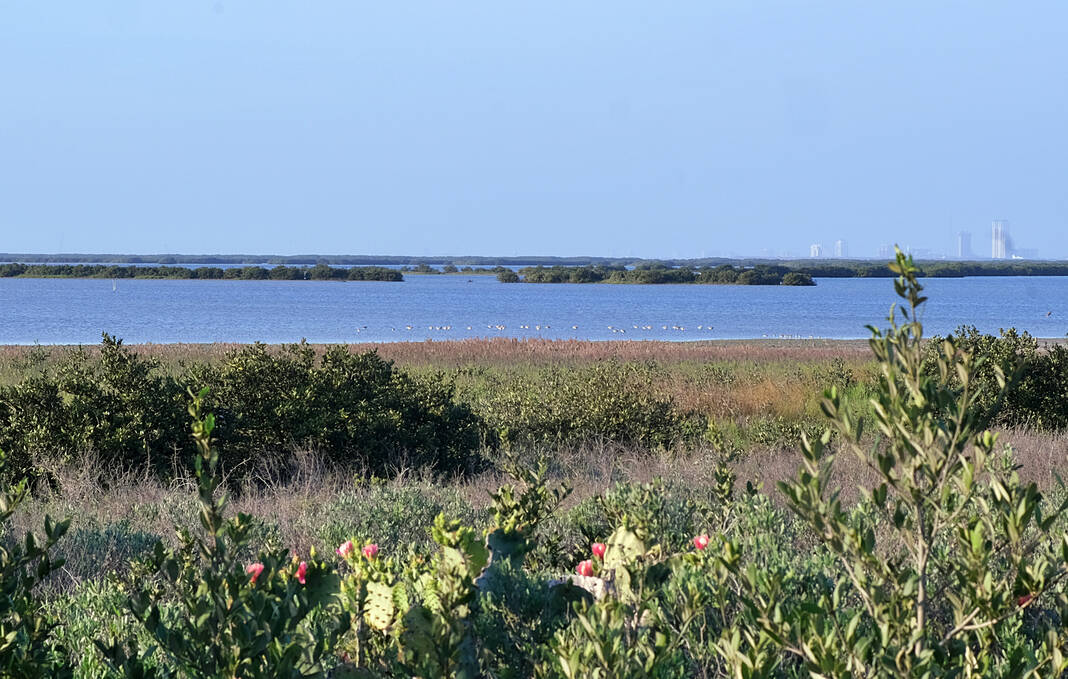
The Lower Rio Grande Valley National Wildlife Refuge was established in 1979 as part of the National Wildlife Refuge System. It is one of more than 570 refuges throughout the United States.
The refuge is home to approximately 1,200 species of plants, 300 butterfly species, and around 700 vertebrates, including 520 species of birds that rely on the habitat.
“Our protected public lands are being gifted for the benefit of the world’s richest man, who could trash them while playing with his exploding rockets,” Laiken Jordahl, a national public lands advocate at the Center for Biological Diversity, said in a news release. “The Lower Rio Grande Valley National Wildlife Refuge was built by decades of conservation work and funded by millions of taxpayer dollars to protect our vulnerable wildlife like ocelots and piping plovers. We’re not letting Trump and his political cronies lock the American people out of Texas’ cherished public lands just to give Elon Musk another payday.”
SpaceX first identified a portion of land near Boca Chica Beach as a potential space shuttle launch site in 2011 and began acquiring land in 2012. The company announced that the Boca Chica area had been selected as its launch site in 2014.

Since then, the area has been the site of numerous rocket launches, attracting widespread attention to the region. The company has continued to expand its operations in the area, culminating with the Federal Aviation Administration’s authorization for SpaceX to conduct 25 Starship launches per year and the company successfully incorporating the city of Starbase last year.
“The proposed land exchange was first made public in March 2026, but records obtained under the Freedom of Information Act show internal agency planning began as early as April 2025,” the news release stated. “In those discussions with the regional director of the Fish and Wildlife Service, the Service developed ‘the most expedited schedule possible’ for completing a transfer and recommended hiring additional staff to meet what they described as an ‘optimum timeframe.’”
“SpaceX has been a nightmare of a neighbor to the Lower Rio Grande Valley wildlife refuge for years, callously harming wildlife that call these special places home,” Jordahl said in the news release. “It’s shameful and insulting that this sweetheart deal has been rammed through just to placate another billionaire in Trump’s orbit. We’ll fight this outrageous sell-out of our public lands with everything we’ve got.”